
Female Pelvic Floor Specialist in Ajman | Dr. Zahra Jahanabadi


Pelvic floor symptoms can be difficult to describe. So, many women search for a female pelvic floor specialist Ajman patients trust.
I am Dr. Zahra Jahanabadi, Female Urologist in Ajman, UAE. My work focuses on the pelvic floor muscles, and I treat the muscles and connective tissues that hold your bladder, uterus, and bowel in place.
Most doctors look at the bladder itself. Some look at the uterus. A pelvic floor specialist looks at the support system underneath both of them. That difference matters because each pattern needs its own treatment plan.
Your Pelvic Floor: Small Muscles, Big Job
Your pelvic floor is a group of muscles stretching from the pubic bone to the tailbone. You never think about them until something goes wrong.
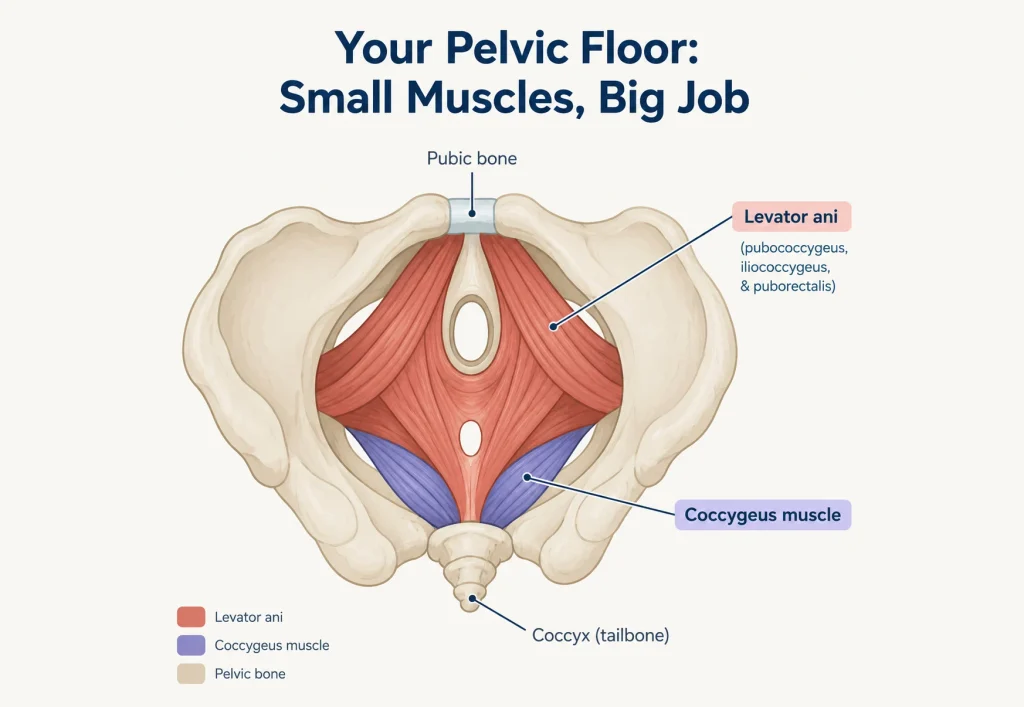
The levator ani group and the coccygeus muscle work with surrounding tissues to hold everything in place and keep daily functions running quietly in the background.
Your pelvic floor helps you:
- Support the bladder, uterus, vagina, and rectum
- Control urine release and bowel movements
- Hold back gas
- Respond to sudden pressure from coughing, sneezing, or lifting
- Stabilize the pelvis and lower spine
- Contribute to sexual sensation
- Adapt throughout pregnancy and birth
These muscles need both strength and flexibility. A healthy pelvic floor engages when it has to, releases fully during urination, and yields during bowel movements. When that balance tips, two very different problems follow.
A weak pelvic floor brings leakage and a dragging sense of heaviness. One locked in constant tension brings pain and trouble emptying. Neither problem gets better from the same fix, which is exactly why reaching for Kegel exercises first is not always the right call.
They build strength in a muscle that genuinely needs it. In a pelvic floor that is already gripping too hard, more squeezing deepens the problem.
What a Female Pelvic Floor Specialist Actually Does
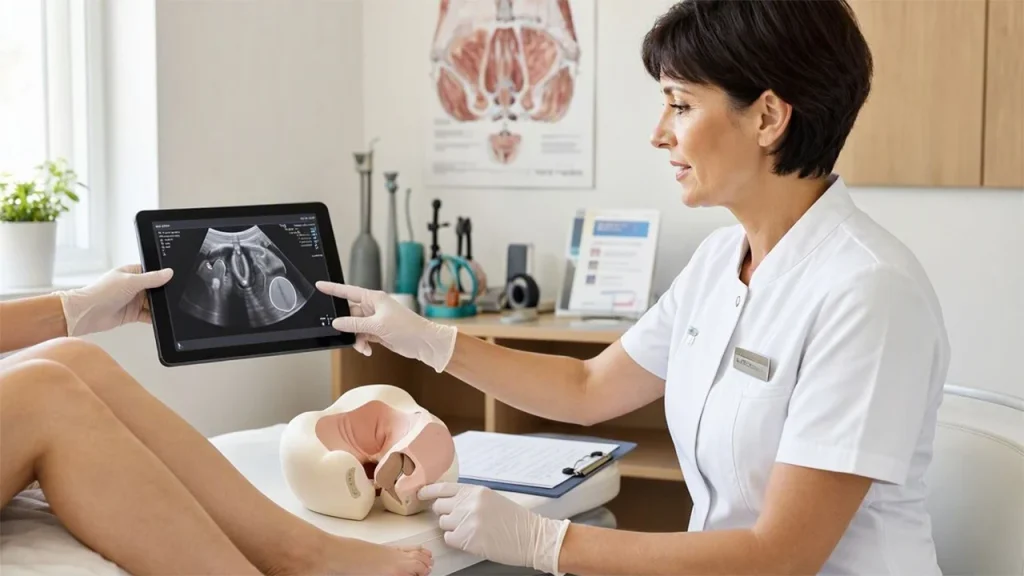
A female pelvic floor specialist works with the full structural and connective tissue framework that holds the pelvic organs in place. Not just the bladder. The entire system, down to how breathe moves through the body.
During a consultation, your doctor must look at:
- How well the pelvic floor muscles contract and release
- Whether the muscles are weak, chronically tight, or firing at the wrong time
- Whether pelvic organs have lost support
- If the pain connects back to muscle tension
- Whether bladder and bowel habits are quietly driving symptoms
Three women with nearly identical complaints can have completely opposite problems underneath. One lacks endurance and fails under load. Another stay locked in tension that never releases. A third has a coordination breakdown: bracing when it should yield, giving way when support is called for.
Without tracing the full picture, treatment stays guesswork.
A Female Pelvic Floor Specialist patients trust needs to look beyond the surface complaint, find the actual pattern, and build a plan specific to your body.
Signs Your Pelvic Floor Is Asking for Help
Bodies speak before diagnoses arrive. Learning the language of your own pelvic floor is the first step towards fixing it, so watch for these patterns.
A weak pelvic floor tends to whisper through:
- Urine leaking when you cough, sneeze, laugh, or exercise
- A dragging sensation or a bulge inside the vagina
- Trouble holding in gas or stool
- Reduced sensation during intimacy
If leakage is your main symptom, our page on Urinary Incontinence Treatment goes deeper. A feeling of heaviness or bulge points to our Pelvic Organ Prolapse Treatment guide instead.
A tight or overactive pelvic floor shows itself differently:
- Difficulty starting urination or passing stool
- A constant urge to urinate that never quite settles
- Pain during intercourse or when inserting a tampon
- Pelvic pain that flares with sitting or stress
An uncoordinated pelvic floor is the confusing one. Women describe contradictory symptoms such as leaking and emptying problems at the same time, or complaints that come and go without any pattern they can name.
If pain dominates your days, read our Pelvic Pain Treatment page. When urgency and frequency rule your schedule, the Overactive Bladder Treatment guide is the better fit.
Weak, tight, and uncoordinated floors respond to different treatments. That is why a proper check-up comes before any exercise plan.
What a Pelvic Floor Check-Up Actually Involves in Ajman
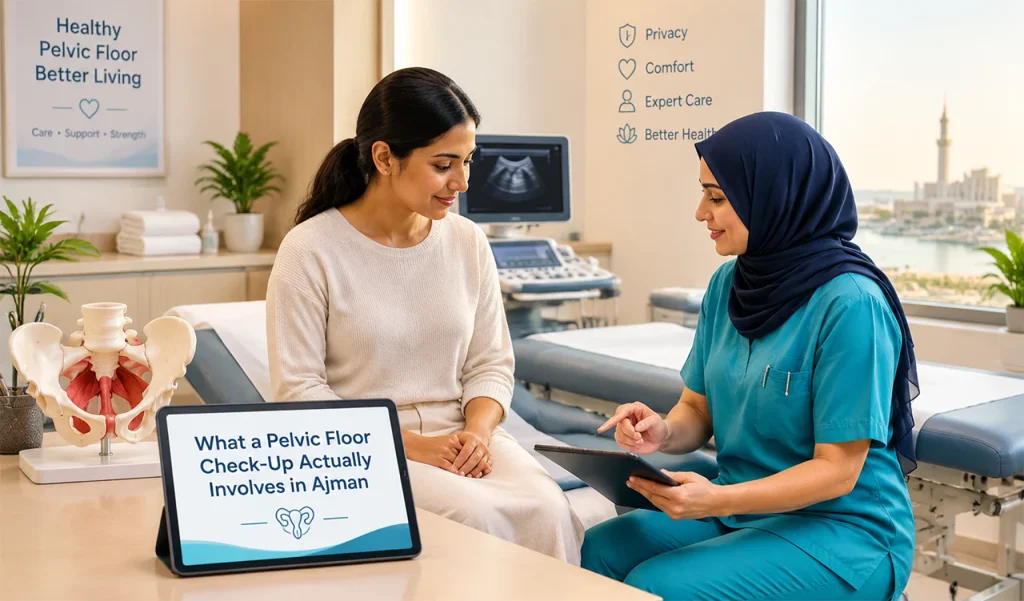
Many women arrive at my Ajman clinic expecting the check-up to feel awkward or painful. If that sounds familiar, let me walk you through it.
We start with a conversation about your symptoms and any pregnancies or births. Your daily routine matters too, as do your bladder and bowel habits. We’ll also talk about sexual function and physical activities.
Next comes the physical exam, if you’re comfortable with it. A gentle internal check helps me understand how well your pelvic floor muscles squeeze and whether they can fully relax afterward. It also lets me check for prolapse or any areas that feel tender.
A few simple tests can help fill in the picture:
- A bladder diary: For three days, you record what you drink and when you pass urine. You also note any leaks.
- A post-void residual measurement: This shows whether your bladder empties fully.
- Urodynamics or ultrasound: We’ll discuss these if we need a closer look.
I know the exam is often the part women worry about most. It usually takes only a few minutes, and I’ll explain each step before I begin. You can ask for a pause at any time.
What Treatment Can a Pelvic Floor Specialist in Ajman, UAE Offer?
Once your doctor has completed the diagnosis, treatment can begin. The plan will depend on what’s causing your symptoms.
Supervised Pelvic Floor Muscle Training
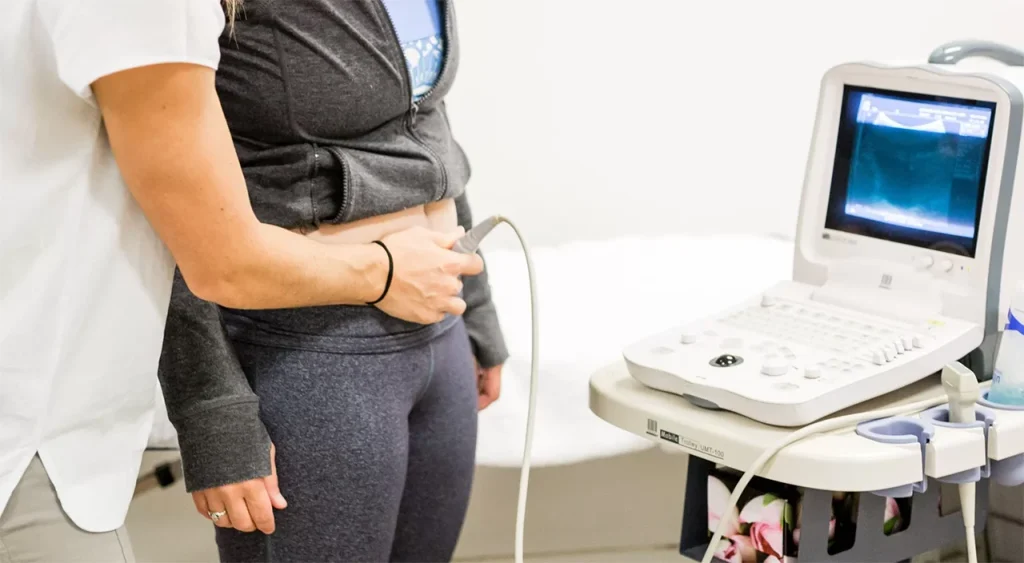
Pelvic floor muscle training, or PFMT, is more than a daily set of Kegels. We work on finding the right muscles first. From there, we practice a comfortable squeeze and a full release.
Your program could have things like:
- Learning to identify the pelvic floor muscles
- Practicing a correct contraction
- Practicing full relaxation
- Building endurance
- Improving quick muscle responses
- Coordinating movement with breathing
- Preparing the muscles for a cough
- Practicing during lifting
- Returning to running with better control
- Checking progress and adjusting the plan
The aim is good movement, not the strongest squeeze you can manage. If your muscles are already tense, relaxation often comes before strengthening. Meaningful improvement commonly takes 3 to 6 months, though your progress will depend on the problem and how consistently you practice.
Biofeedback Therapy
You stop guessing what your muscles are doing and start knowing. With sensors or another suitable clinical method, you can see whether you are squeezing the right muscles. You can also see whether they let go afterward.
Manual Therapy
At Thumbay University Hospital, our pelvic floor specialists can provide manual therapy for muscles that stay tight or feel sore. Gentle hands-on treatment focuses on the pelvic floor and nearby tissues. Breathing exercises can also help you practice relaxing those muscles.
Electrical Stimulation
If you struggle to find or activate your pelvic floor muscles, gentle electrical stimulation may help. It is usually one part of treatment rather than the whole plan. As you gain control, we pair it with exercises you can do yourself.
Vaginal Pessaries
A pessary is a silicone support placed inside the vagina. For some women with prolapse symptoms, it can make daily activities more comfortable. Some wear one regularly. Others use it for exercise.
The right fit matters, as does follow-up. I’ll show you how to use it and explain when to have it checked.
Bladder and Bowel Strategies
What happens outside the clinic matters. Bladder training may help with urgency, while changes to bowel habits can ease straining. We can also adjust exercise as you recover.
This is not about giving you a long list of things to avoid. It is about helping you feel confident doing the things that matter.
When Surgery Is Worth Discussing
Significant prolapse sometimes calls for a surgical opinion. The same is true when leakage continues despite non-surgical treatment.
Surgery is not everyone’s first step. If it becomes relevant, we’ll talk through why and consider the other options before discussing recovery.
Three Pelvic Floor Myths I Hear Every Week
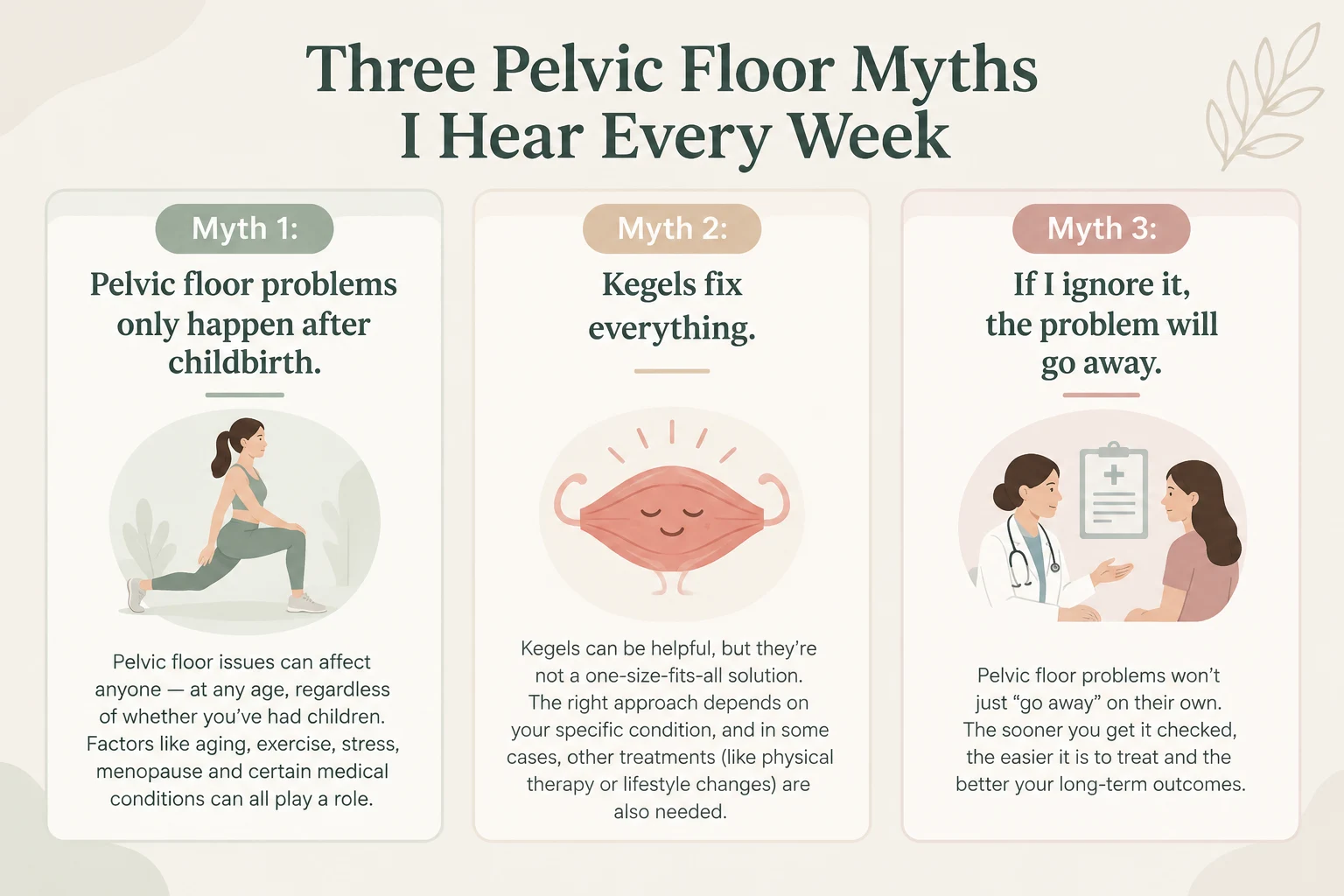
Myth 1: Pelvic floor problems only happen after childbirth
Childbirth can affect the pelvic floor, but it is not the only cause. Women who have never been pregnant can have symptoms too. I also see problems linked to chronic constipation or high-impact exercise. Some connective tissue conditions can play a part.
A caesarean birth does not rule out pelvic floor symptoms. Pregnancy itself places pressure on these muscles.
Myth 2: Kegels fix everything
Kegels can help when the pelvic floor is weak. But if the muscles are already too tight, more squeezing can make pain worse. Extra squeezing can make urination difficult and interfere with comfortable bowel movements.
That is why I start by checking how the muscles work. Some women need to build strength. Others need help relaxing the muscles or getting the timing right.
Myth 3: If I ignore it, the problem will go away
A mild symptom sometimes settles with a few changes. If leaking continues or a heavy feeling becomes more noticeable, it is worth getting help. Pain that affects exercise or intimacy deserves attention too.
Getting checked early does not mean starting intensive treatment. It means finding out what is happening and choosing a sensible next step.

Let’s Talk About Your Pelvic Floor: Book a Consultation
One of my patients started supervised pelvic floor training 6 weeks after giving birth. She was leaking whenever she lifted her newborn. Six months later, she ran her first 5K. Progress took time, but with the right exercises and support, she got there.
If you’re dealing with similar symptoms, you can book a consultation with me, Dr. Zahra Jahanabadi, at Thumbay University Hospital.


You can submit the first comment for this post using the form above.