

Urine leakage can happen when you cough, laugh, exercise, or suddenly need to use the bathroom. Some women notice it only occasionally, while others begin avoiding exercise, travel, or social activities because they are worried about an accident.
Leakage is common, but it is not something you simply have to put up with. The first step is to identify the type of incontinence and understand what is causing it.
Urinary incontinence is common among women of different ages. It may develop after pregnancy and childbirth, during menopause, with weight changes, or because of an overactive bladder. However, common does not mean untreatable.
Many patients delay making an appointment because they feel embarrassed or assume the problem is simply due to ageing or childbirth. In the consultation, we discuss the symptoms privately and at your own pace. I first try to understand when the leakage occurs, how often it happens, and how it affects your daily routine.
Once the likely cause is clear, we can discuss practical treatment options and decide whether any further tests are needed.
As a female urologist, I provide confidential, women-focused assessment and treatment for stress incontinence, urge incontinence, mixed incontinence, overactive bladder, and related pelvic floor concerns.
Urinary incontinence is not inevitable. In many cases, symptoms can be reduced or managed successfully with the right treatments.
Symptoms of Urinary Incontinence
The pattern of leakage is often helpful in identifying its cause. For example, leakage during a cough or workout points toward a different problem than a sudden urge that gives you little time to reach the toilet. Some people have one pattern; others have a combination of symptoms.
You may have urinary incontinence if you experience:
You may want to arrange an assessment if you notice:
- Leakage when coughing, sneezing, laughing, lifting, or exercising
- A sudden urge that is difficult to postpone
- Leakage before reaching the toilet
- Frequent urination during the day or waking several times at night
- A weak stream, difficulty emptying, or ongoing dribbling
- More than one of these symptoms
Understanding Urinary Incontinence: Types Every Woman Should Know
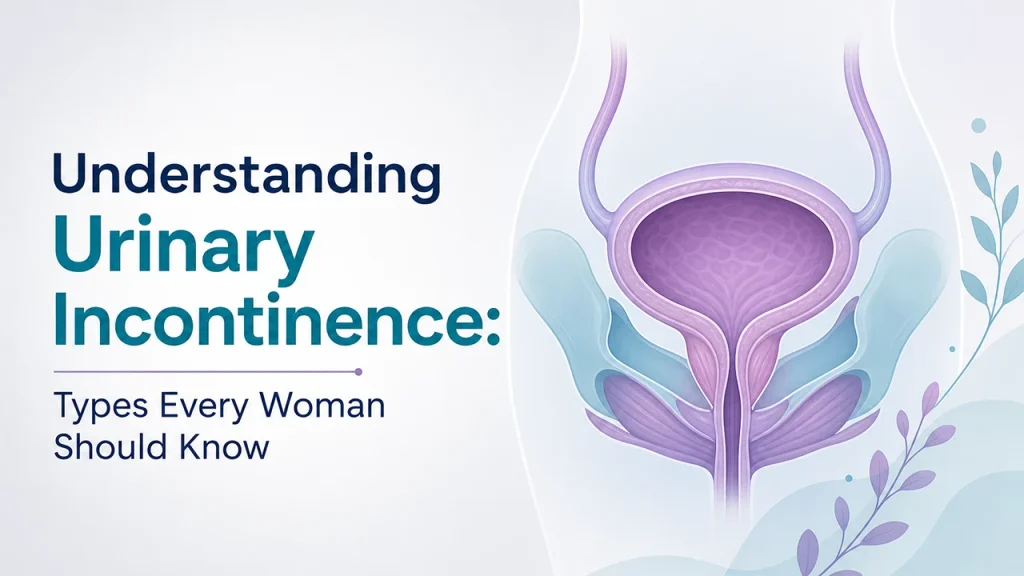
The same symptom—urine leakage—can have several different causes. Working out when the leakage happens and what triggers it helps determine which treatments are most likely to help.
Stress Urinary Incontinence (SUI)
Leakage that happens with physical pressure — coughing, sneezing, laughing, lifting, or exercise. This is the most common type in women, especially after vaginal childbirth, and it occurs when the pelvic floor muscles and urethral support are weakened.
If you’ve started avoiding the gym or crossing your legs before you sneeze, this is likely you. Stress urinary incontinence treatment in Ajman is one of the most frequent reasons women visit me — and one of the most successfully treated.
Urge Incontinence & Overactive Bladder (OAB)
Urge incontinence causes a sudden, overwhelming urge to urinate, often followed by leakage before reaching the bathroom.
This condition commonly involves urinating very frequently (more than 8 times a day) or waking multiple times at night. It is caused by an overactive bladder muscle contracting when it should not.
Mixed Incontinence
Many women experience both stress and urge symptoms together. Mixed incontinence treatment requires careful assessment to identify which component bothers you most, so we treat that first.
Overflow Incontinence
Overflow symptoms can occur when the bladder does not empty properly. Patients may notice a weak stream, difficulty starting, a feeling of incomplete emptying, or repeated dribbling. Possible causes include medication effects,-related problems, or an obstruction. A residual urine measurement can help determine whether the bladder is retaining urine.
Functional Incontinence
The bladder itself works normally, but mobility limitations, arthritis, or cognitive conditions make it difficult to reach the toilet in time.
Common Causes and Risk Factors for Female Incontinence
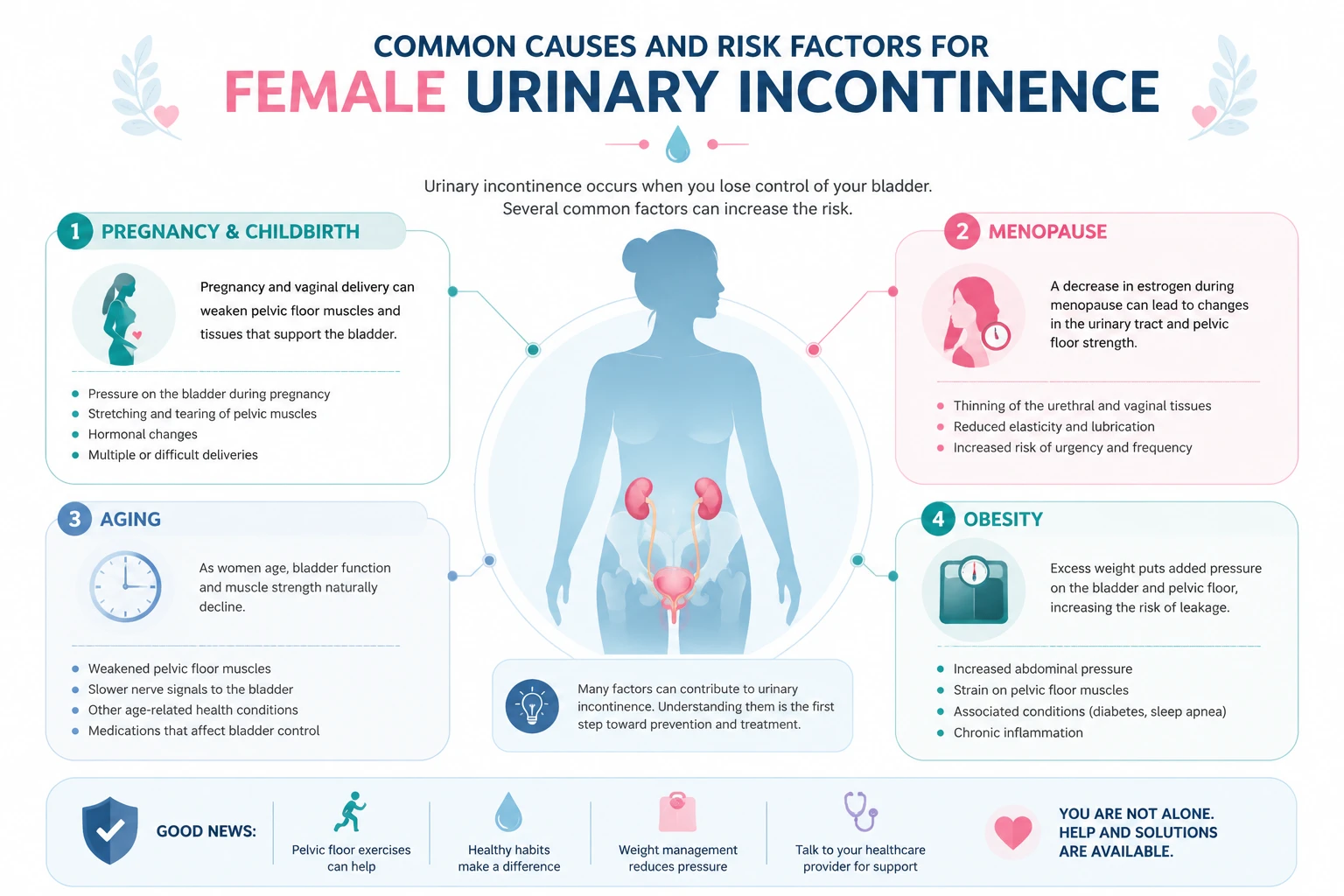
Age can increase the likelihood of bladder symptoms, but it is not the only explanation. Pregnancy, childbirth, menopause, constipation, weight changes, medications, neurological conditions, and repeated coughing can all play a role. During an assessment, we review the factors that may be contributing to your symptoms and identify which ones can be addressed.
- Factors that may contribute include:
- Pregnancy or childbirth, particularly when the pelvic-floor tissues have been significantly stretched or injured
- Menopause-related changes affecting the vaginal and urethral tissues
- Increased abdominal pressure associated with weight gain
- Ongoing constipation and straining
- Chronic cough or smoking
- Some neurological conditions
- Certain medications or medical conditions that affect bladder function
- A family history of urinary leakage
Having one of these factors does not, by itself, establish the cause. Symptoms, examination findings, and sometimes testing are needed to work out what is happening.
Childbirth-related pelvic floor weakness can appear years later, especially around menopause. If you also notice a bulge, heaviness, or difficulty emptying, we assess for pelvic organ prolapse at the same visit.
How Is Urinary Incontinence Diagnosed? Our Comprehensive Approach
The first appointment usually begins with questions about the timing of leakage, urgency, frequency, childbirth history, previous operations, medications, fluid intake, and bowel symptoms. Not every patient needs every test. The investigations are chosen according to the symptoms and the findings on examination.
- Detailed medical history
- 3-day bladder diary
- Focused physical examination
- Urinalysis
- Cough stress test
- Post-void residual measurement
- Urodynamic testing in Ajman
- Cystoscopy
Most women need only the first five steps. Advanced testing is reserved for cases where it will genuinely change the treatment plan.
Urinary Incontinence Treatment in Ajman, UAE: Personalized Options
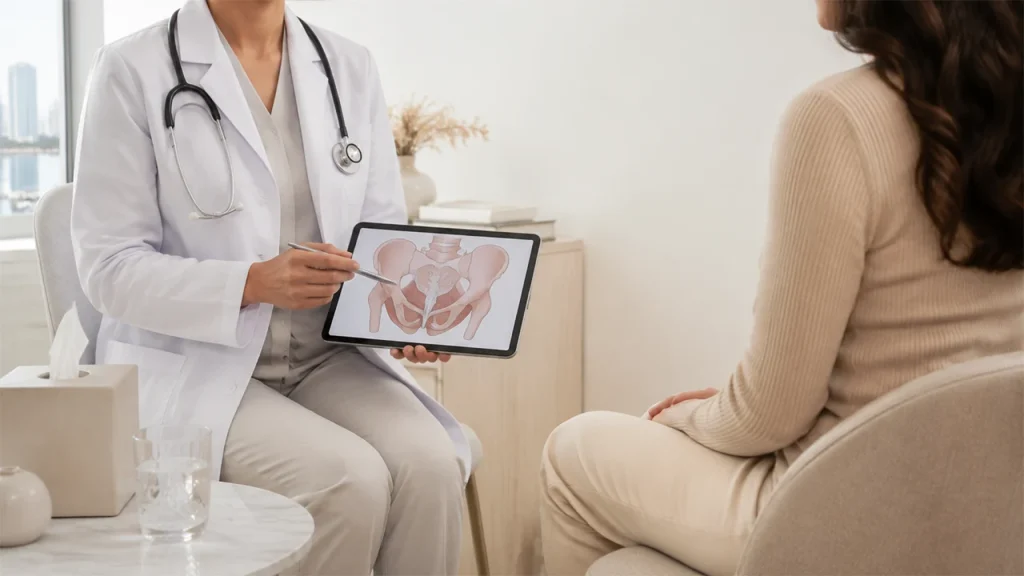
The best treatment depends on the type and severity of your incontinence, the effect on your daily life, your health, and your preferences. I usually begin with conservative care unless there is a specific reason to recommend another approach.
1- Pelvic Floor Muscle Training
This treatment method, which is sometimes called Kegel exercises, is a first-line treatment for many women with stress or mixed urinary incontinence.
The pelvic floor muscles help support the bladder and urethra. A supervised programme can teach you how to correctly contract and relax these muscles instead of relying on guesswork.
Treatment options include:
- Identifying the correct muscles
- Building strength gradually
- Learning to contract before coughing or lifting
- Improving endurance and coordination
- Avoiding excessive tightening of the abdomen or buttocks
- Continuing exercises consistently over time
A structured program commonly requires several months of regular practice. Improvement depends on the cause of leakage, the accuracy of the exercises, and adherence.
2- Bladder Training
This method is particularly useful for urgency, frequent urination, and overactive bladder treatment in Ajman. It teaches you to gradually extend the time between toilet visits and respond to urgency using controlled techniques.
A bladder-training program may last at least six weeks.
3- Lifestyle Modifications
Simple changes can reduce symptoms or improve the effect of other treatments:
- Reduce caffeine if it worsens urgency
- Avoid excessive fluid restriction
- Treat constipation
- Maintain a healthy weight
- Stop smoking
- Manage chronic cough
- Avoid bladder irritants that trigger your symptoms
- Plan bathroom access during travel or long meetings
You should generally remain hydrated. Drinking too little can concentrate the urine and irritate the bladder.
4- Vaginal Oestrogen
For selected post-menopausal women with vaginal or urinary symptoms related to tissue changes, local vaginal oestrogen may be considered. It is different from systemic hormone therapy and must be discussed in the context of your personal medical history.
Medication for Urgency and Overactive Bladder
When bladder training and lifestyle measures are not enough, medication is usually considered.
Antimuscarinic Medicines
Antimuscarinic medicines can reduce involuntary bladder contractions and urgency.
Mirabegron
Mirabegron is a beta-3 agonist that relaxes the bladder during its storage phase. It can be an alternative for some women who cannot tolerate the side effects of antimuscarinic medicines.
Minimally Invasive Treatment
When lifestyle changes, bladder training, and medication do not adequately control urgency incontinence or overactive bladder, minimally invasive treatments may be considered.
Options include:
- Botox injections
- Percutaneous tibial nerve stimulation (PTNS)
- Sacral neuromodulation
The most suitable option depends on your symptoms, previous treatments, medical history, and personal preferences. Benefits, risks, availability, treatment duration, and follow-up requirements should be discussed during consultation.
Surgical and Supportive Options for Stress Incontinence
When stress urinary incontinence persists despite conservative treatment and continues to affect your quality of life, surgical or supportive options may be considered.
A sling procedure supports the urethra and is an established surgical treatment, while urethral bulking agents offer a less invasive option but may require repeat treatment.
A vaginal pessary is a removable device that supports the bladder neck and urethra and may be suitable for women who experience leakage during exercise or prefer to avoid surgery.
Why Choose Dr. Zahra Jahanabadi for Incontinence Treatment?

Choosing a Female Urologist in Ajman is not only about comfort, though comfort matters.
Specialization: I treat women’s pelvic and bladder conditions every week. I understand both the anatomy and the hesitation that keeps many patients silent.
Comprehensive care: You do not need one clinic for Kegels, another for urodynamics, and a third for a sling discussion. We cover non-surgical incontinence treatment through to advanced procedures.
State-of-the-art facilities: Care is delivered in collaboration with Thumbay University Hospital in Ajman, with access to diagnostic services and operating theatre facilities when needed.
Cultural sensitivity: Appointments are discreet. We can discuss a female-only clinical setting, a chaperone, and how to time visits around family and work. Nothing you say is treated as shameful.
Evidence-based practice: Plans follow current NICE, International Continence Society, and related guideline updates, including newer positioning of Botox and the continued first-line role of pelvic floor rehabilitation.





You can submit the first comment for this post using the form above.