
Burning and Painful Urination Treatment for Women in Ajman


It can be hard to think about anything else when urination hurts. A long drive feels daunting. Even in a meeting, you might find yourself worrying about the next time it stings. If you’ve been treated for a UTI but the burning keeps coming back, it’s worth taking a closer look again.
Doctors call painful urination dysuria. You might feel a sharp burn as urine passes, or a deeper ache around your bladder. For some women, the pain seems to come from the urethral opening. For others, it’s harder to pinpoint.
Dysuria is common, but treatable. The cause isn’t always a UTI, especially when symptoms return after treatment. A specialist female urologist doctor can ask about your symptoms and do the right tests to find out what’s going on.
If you’re searching for burning urination treatment for women in Ajman, UAE, ask yourself this: why does it hurt? The same goes if you’ve searched for painful urination treatment for women in Ajman. Finding the cause is the first step.
What Is Dysuria or Painful Urination in Women
Dysuria is the medical term for pain or discomfort when you urinate. It can feel like:
- Burning or scalding
- Stinging at the urethral opening
- A sharp pain
- A sensation like “razor blades”
- Pain in the bladder or pelvis
- Stinging when urine touches the vulva
The pain can start as you begin to urinate. It can also happen while you’re urinating or just as you finish. Some women feel it near the vulva. Others feel it deeper in the bladder.
Painful urination is common. Some research suggests that acute dysuria affects up to 20% of otherwise healthy women under 60 each year. If the pain comes back after treatment, speak with your doctor. It could be an infection or another condition that needs different care.
Common Causes of Burning or Painful Urination in Women
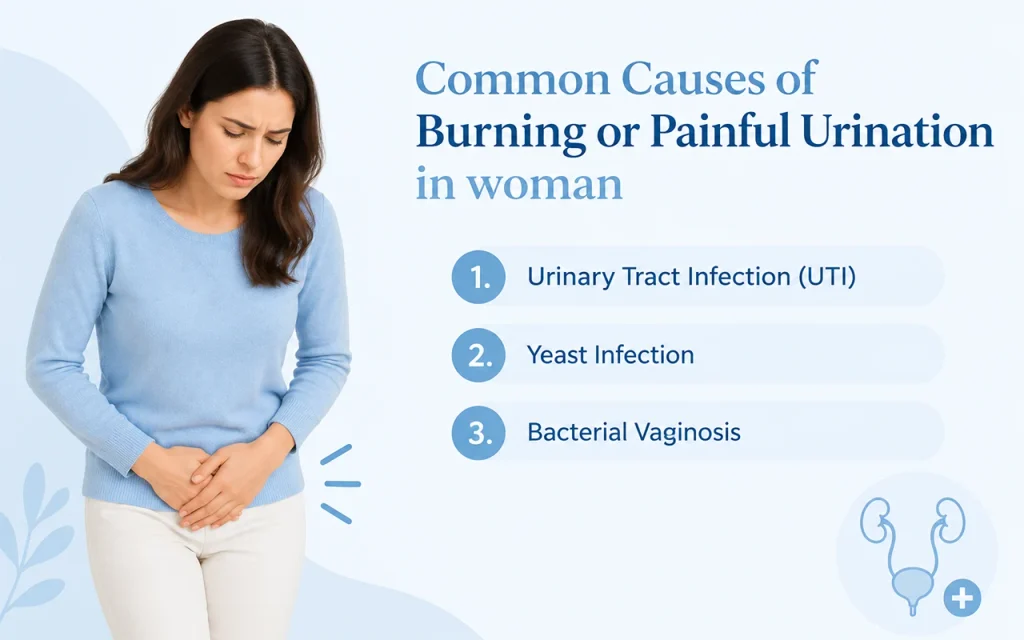
When a patient asks me, “Why does it burn when I pee?” my honest answer is that there are several possible reasons. According to the Merck Manual, dysuria results from irritation of the urethra or bladder. Infection is the most frequent trigger, but it is far from the only one.
Infectious causes
Cystitis (bladder infection)
Most common cause in women. Burning often comes with a frequent or urgent need to urinate. Some women also have pain over the bladder. Their urine can look cloudy, contain blood or have an unusual smell.
Urethritis
This is inflammation of the urethra. Sexually transmitted infections such as chlamydia and gonorrhea are common causes. Urethritis is more common in women under 30. Visible discharge can be a clue.
Vulvovaginitis
Inflammation of the vulva and vagina can make urination burn. The urine itself can be free of infection. The pain comes when it passes over inflamed tissue.
Non-infectious causes
Post-menopausal atrophy
Declining estrogen thins the tissues of the vulva and vagina. Urine can then sting skin that has become fragile and inflamed.
Interstitial cystitis / bladder pain syndrome
This causes ongoing bladder pain and urgency without an infection.
Pelvic floor dysfunction
Overly tight pelvic floor muscles can cause pain that feels as though it comes from the urethra.
Chemical irritants
Soaps and douches can irritate sensitive tissue. Spermicides and scented hygiene products can do the same.
Kidney stones
A stone moving into the lower ureter may cause pain during urination.
Medications and trauma
Some drugs cause dysuria as a side effect. Catheterization and surgery can irritate the urethra. Vigorous sexual activity can also cause irritation.
Why women are more vulnerable
The female urethra is short and sits close to the vagina and anus. This makes it easier for bacteria to reach the bladder. Sexual activity can raise the risk, as can a history of recurrent UTIs.
Hormonal shifts during pregnancy and around menopause can also affect your risk, while spermicide or diaphragm use can increase it further; understanding how these factors apply to you helps guide the right treatment.
External vs. Internal Dysuria: Where You Feel the Pain Matters
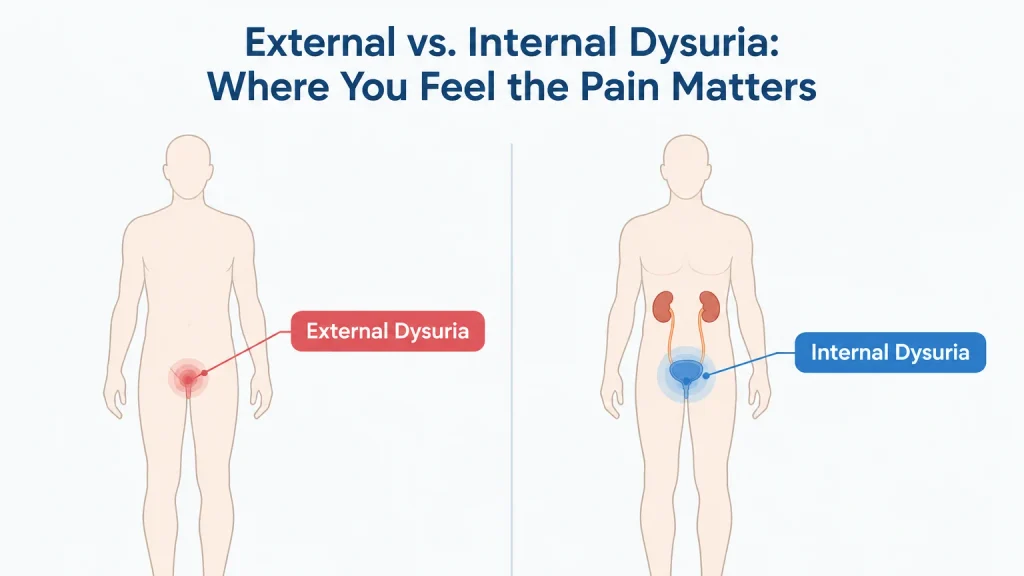
When I evaluate a woman with dysuria, I ask one question:
“Do you feel the burning as urine comes out, or deeper inside?”
The answer often gives me an early clue.
External dysuria
External dysuria is felt near the urethral opening or on the skin around it. It often stings when urine touches inflamed tissue.
Possible causes include:
- Vulvovaginitis: inflammation of the vulva and vagina
- Dryness after menopause: thinner, more sensitive tissue
- Vulvar dermatitis: irritated skin
- Vulvodynia: ongoing vulvar pain
- Hygiene products: irritation from soaps or scented products
- Small tissue injuries: tender skin that stings on contact
In these cases, the urine can be free of infection. If the burning comes from irritated skin, treatment for a bladder infection alone might not help.
Internal dysuria
The pain is felt deeper in the urethra or bladder. Sometimes it seems to come from the lower pelvis.
Possible causes include:
- Cystitis: a bladder infection
- Urethritis: inflammation of the urethra
- Bladder pain syndrome: ongoing bladder pain without infection
- A urinary stone: a stone in the urinary tract
- Incomplete emptying: urine left in the bladder after urination
You might also notice a frequent need to urinate or pressure over the bladder. Cloudy urine and blood in the urine are other possible signs.
The location of the pain does not confirm a diagnosis on its own. It does help guide a closer look at the urinary tract and the vulvovaginal area.
Treatment Options for Burning Urination for woman in Ajman

Burning urination treatment for women in Ajman depends on the diagnosis.
Treatment for infections
If tests confirm a bacterial infection, your female urologist in ajman can prescribe an antibiotic. Culture results can help guide the choice when available.
Urethritis caused by a sexually transmitted infection (STI) calls for testing and treatment. Your doctor can advise whether a partner also needs care. The treatment depends on the infection and current clinical guidance.
This page does not replace a detailed UTI treatment plan. For infection-specific information:
please see our page: About UTI treatment options
Treatment for vaginal and hormonal causes
For dryness and tissue changes after menopause, treatment may include:
- Vaginal moisturisers or lubricants to ease dryness
- Locally applied vaginal oestrogen when suitable
- Avoiding irritants that make symptoms worse
- Care for related urinary symptoms when needed
Your health history helps determine which options are safe for you.
Pelvic floor dysfunction treatments
If your pelvic floor muscles are tense or painful, physiotherapy usually helps. Breathing techniques sometimes support that work.
Your specialist doctor can address constipation and suggest changes to your posture or toilet habits. Strengthening exercises are not right for every pelvic floor problem; some women need to relax overactive muscles first.
Treatment for bladder pain syndrome
Treatment is usually including changes to your diet and daily habits, medicines for bladder symptoms and pain, or pelvic floor therapy.
In selected cases, a doctor can recommend treatment placed directly into the bladder.
Ways to ease discomfort
While you wait for a medical review, drink a reasonable amount of water and avoid scented products that irritate the area. A warm compress over your lower abdomen can offer temporary comfort.
If you need pain relief, check that the medicine is safe for you.
Do not take sodium bicarbonate or potassium citrate to change the acidity of your urine without medical advice. The same applies to antibiotics and other medicines. These products can be unsuitable during pregnancy or for people with kidney disease. Heart conditions and medicine interactions also matter.
Painful Urination Treatment for Women in Ajman
Mild symptoms without warning signs can sometimes improve with hydration and short-term care at home. If the burning persists or keeps returning, arrange a medical review.
Seek medical care if:
- The burning lasts longer than one or two days or is getting worse.
- You have repeated episodes or previous antibiotics did not help.
- You notice blood in your urine.
- You have vaginal discharge or pelvic pain.
- You are pregnant or think you could be pregnant.
- You have diabetes or a weakened immune system.
Specialist care offers more than another prescription. It gives you an explanation for your symptoms and a treatment plan that fits.

Home Treatments and Herbal Options

Cranberry juice or cranberry capsules can support urinary health in some women. They do not clear an active infection. Choose unsweetened products and ask a doctor first if you take warfarin or have kidney stones.
Caffeine-free teas such as chamomile, ginger, peppermint, corn silk, nettle leaf, and marshmallow root can help with fluid intake. Their benefit for painful urination is not certain.
Some women use uva ursi, dandelion, horsetail, or goldenrod for urinary symptoms. These herbs can interact with medicines and are not suitable for everyone.
Never place herbs or essential oils inside the vagina or on the vulva. They can cause irritation or burns.
Important Caution: Do not use leftover antibiotics or herbal products instead of getting medical care.
Seek urgent medical help if you have:
- A fever or chills, especially if you also feel unwell
- Pain in your back or side, particularly below the ribs
- Vomiting that makes it hard to keep fluids down
- Blood you can see in your urine
- Severe pain in your lower abdomen or pelvis
- Trouble passing urine, including being unable to urinate
Why Choose a Female Urologist in Ajman?
Burning and Painful urination can be difficult to talk about, especially when it involves intimate symptoms. I explain each step of an examination before it begins so you know what to expect.
In my daily work, I see urinary problems as well as vaginal and pelvic floor conditions that can cause burning. If symptoms call for further testing, The Thumbay University Hospital offers urine tests and specialist investigations.
I’m Dr. Zahra Jahanabadi, a Consultant Urologist with over 18 years of clinical and surgical experience.
Book your consultation for burning or painful urination; I regularly serve patients from Ajman, Sharjah, Dubai, and across the UAE.


You can submit the first comment for this post using the form above.