


Urodynamic testing in Ajman, UAE helps doctors understand how the bladder and urethra store and release urine. It is usually recommended when symptoms do not have a clear cause. If you leak when you laugh, if you visit the toilet ten times before noon, if you cannot empty your bladder no matter how hard you try, this article is for you.
I am Dr. Zahra Jahanabadi, a female urologist in Ajman. Many women experience bladder symptoms but are unsure what is causing them or which tests may be helpful. This article explains what urodynamic testing involves and what you can expect during the appointment. They have been given pads, antibiotics, or vague reassurance. What they have not been given is a proper answer.
The test can provide useful information about how the bladder is functioning and help guide the next stage of treatment.
So let me walk you through this test honestly — what it measures, what it feels like, what it cannot do, and what happens after.
Who Needs Bladder Diagnostics?
Dr. Zahra recommends a urodynamic evaluation for women experiencing any of the following:
- Urinary incontinence: leaking with coughing, sneezing, laughing, or physical activity
- Frequent urination: an urgent need to urinate, or waking several times during the night to use the toilet
- Incomplete bladder emptying: a persistent sensation that the bladder has not fully drained
- Recurrent urinary tract infections: particularly when a structural or functional cause is suspected
- Pelvic organ prolapse: where the bladder, uterus, or rectum shifts out of its normal position
- Neurological conditions: affecting bladder control
- Failed conservative treatment: when lifestyle changes, pelvic floor exercises, or initial medications have not produced adequate relief
What You Should Know About Urodynamic Testing
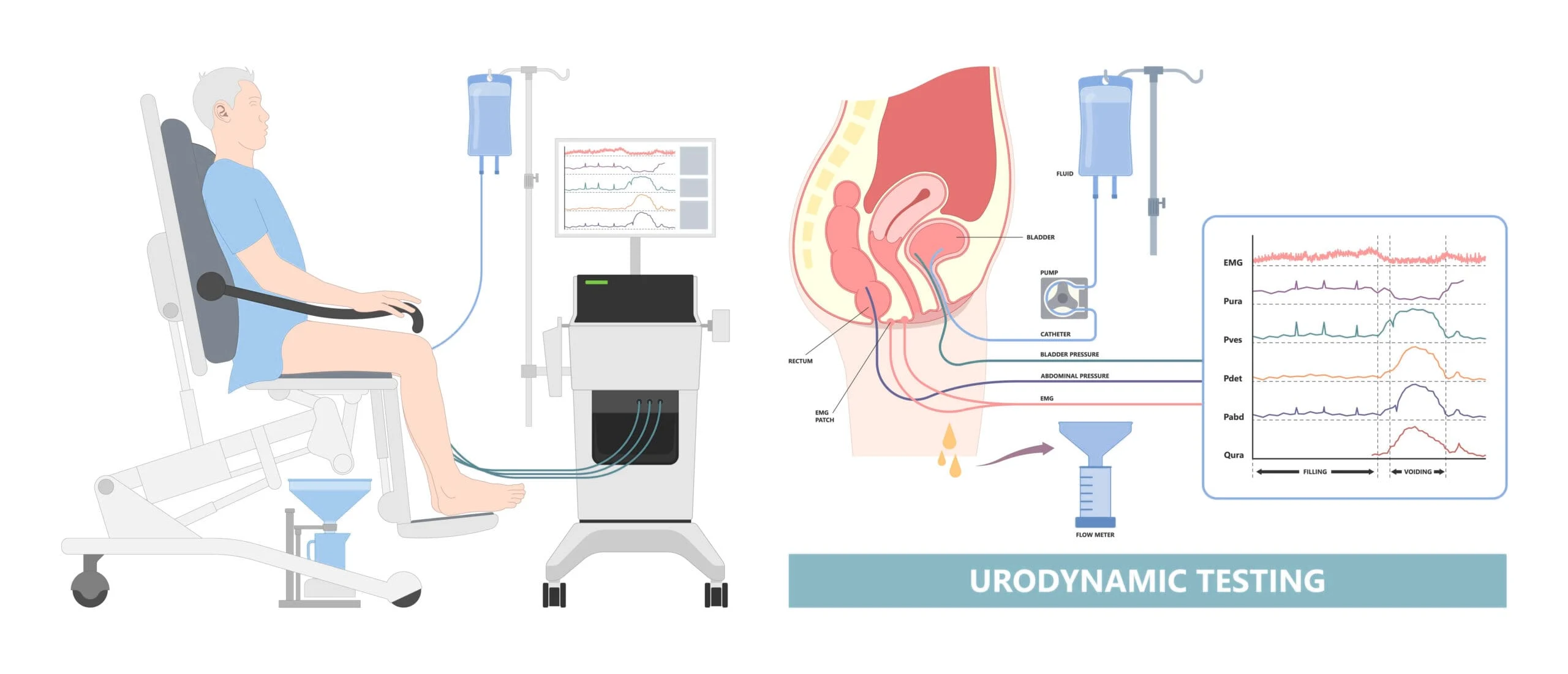
Urodynamic testing is a specialized set of diagnostic procedures that measures how well the bladder, sphincters, and urethra store and release urine. Unlike basic ultrasound or urinalysis, these tests evaluate the dynamic function of the lower urinary tract under real-life conditions.
In simple terms, the test helps answer questions such as:
- Does the bladder contract too early?
- Can the bladder store a normal amount of urine?
- Is urine leaking because of physical pressure, such as coughing or lifting?
- Is the bladder muscle too weak to empty properly?
- Is there an obstruction affecting urine flow?
- Are the pelvic floor muscles relaxing appropriately during urination?
- Is there a high post-void residual volume?
- Could a neurological condition be affecting bladder function?
A complete study commonly takes approximately 30 to 60 minutes, depending on the tests required. Most women remain awake and are able to describe what they feel during bladder filling. Sedation is not routinely necessary.
Most patients tolerate the test well. Inserting the catheter may cause brief stinging or pressure. A lubricating or numbing gel might be used to make the procedure more comfortable. Lubricating or local numbing gel may be used to improve comfort.
Urodynamic testing is not automatically required for every woman with urinary symptoms. I have performed urodynamic studies on women in their twenties and women in their eighties. The protocol changes with the patient.
Types of Urodynamic Tests
The exact tests required depend on your symptoms and clinical findings. Some women need only a simple bladder assessment, while others may benefit from a complete urodynamic study.
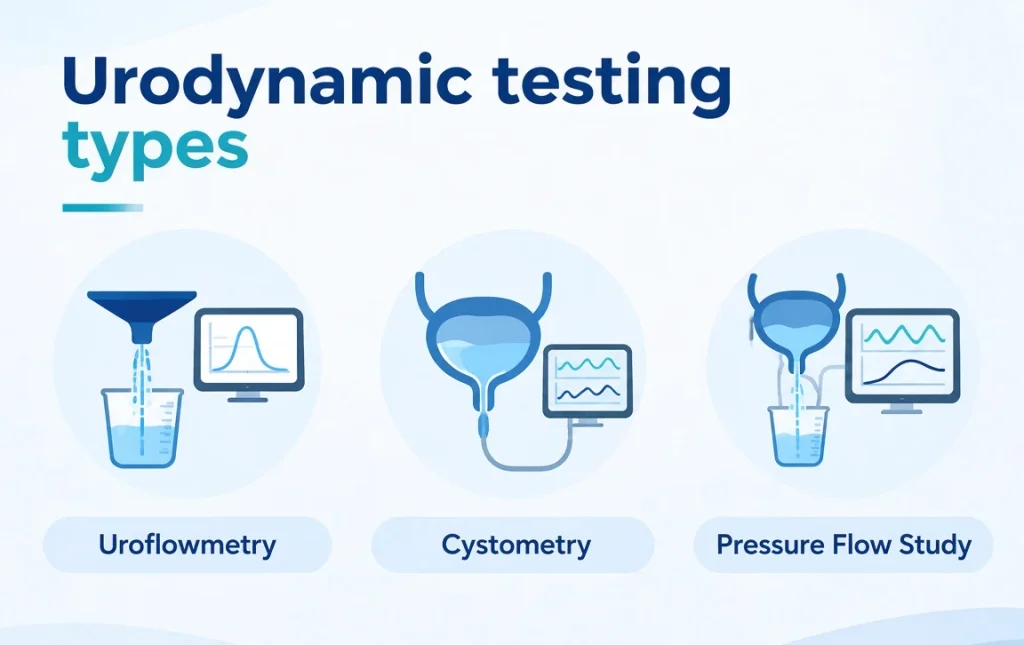
| Test | What It Measures | How It Is Done |
| Uroflowmetry | Speed and pattern of urine flow, total volume | You urinate privately into a special commode connected to a computer |
| Post-Void Residual (PVR) | Urine left in the bladder after voiding | Measured by ultrasound, or by catheter |
| Cystometry | Bladder capacity, pressure, sensation, and muscle activity | Sterile water fills the bladder slowly through a thin catheter while you report what you feel |
| Electromyography (EMG) | Pelvic floor and sphincter muscle activity | Small electrode patches placed near the urethra or rectum |
| Pressure-Flow Study | Bladder pressure during voiding; detects obstruction | You void with the catheter in place while pressures are recorded |
| Video Urodynamics | Structure and function of bladder and urethra during filling and emptying | X-ray contrast fluid used alongside imaging |
What Urodynamic Testing Cannot Show
I want to be transparent with you, because I think you deserve that from a specialist. Urodynamic testing is the best tool we have for understanding bladder function. It is not perfect. It will not always give a complete answer to every voiding problem.
What urodynamics cannot tell us:
- How your symptoms actually feel to you
- How much they affect your work, your marriage, your sleep, your mood
- The emotional toll of living with bladder problems for years
- Whether you personally will respond to a given treatment
That last point matters. No machine can promise an outcome. The results give your doctor more information when deciding which treatment options can be appropriate. They are considered together with your current symptoms and medical history.
So I combine urodynamic data with your history, your diary, and above all your experience. The test is one piece of the puzzle. You are the rest.
Preparing for Urodynamic Testing in Ajman
Preparation is simple yet important for accurate outcomes:
- Drink fluids as instructed to ensure a full bladder.
- Avoid caffeine or diuretics on the day of testing.
- Inform the clinic about medications, allergies, or current infections.
- Wear comfortable clothing.
Most people can return to their normal activities after the appointment. You can notice mild burning when passing urine or a small amount of spotting for a short time.
The Day of Your Test: What to Expect, Moment by Moment
I know the unknown is the hardest part. So here is the whole day, in order.
On arrival. You will be taken to a private room — not a shared ward. You will undress from the waist down and wear a hospital gown. A chaperone is always available, and my team is entirely female where possible.
The first ten minutes. You will be asked to pass urine into the flowmeter. This part is completely private and completely painless. It gives us your baseline flow pattern and your residual volume.
The main study. The catheters are placed. Most women rate the sensation as a mild sting or pressure that fades within seconds. Filling is slow and controlled, and you set the pace — if you feel uncomfortable, we slow down or pause.
The emptying phase. You will be asked to urinate with the catheter still in place. It feels strange, not painful. Many women find this the easiest part.
The end. Everything is removed. You get dressed, we talk briefly about what we saw, and you go home. No sedation, needles or overnight stay.
What Your Results Mean: From Diagnosis to Treatment
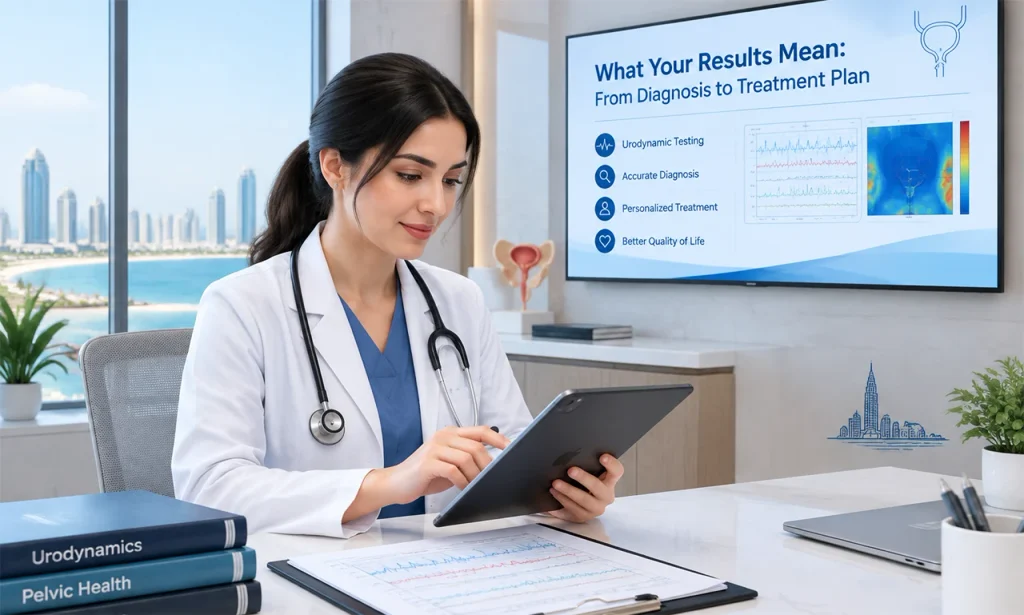
Urodynamic findings are not interpreted in isolation. I consider your complete medical history and treatment goals.
Possible findings
Detrusor Overactivity:
The muscle of your bladder contracts unexpectedly while it’s filling. This can lead to a sudden, strong need to urinate (urgency), frequent trips to the bathroom, and leakage when you can’t reach the toilet in time.
Stress Urinary Incontinence:
Leakage occurs when pressure in your abdomen increases, such as when you cough, laugh, sneeze, lift something heavy, or exercise.
Bladder Outlet Obstruction:
The flow of urine is restricted. This is less common in women but can happen after certain procedures, due to pelvic floor issues, or for other structural or functional reasons.
Detrusor Underactivity:
The bladder muscle doesn’t contract strongly enough to empty the bladder completely.
Poor Pelvic Floor Relaxation:
The pelvic floor muscles or the urinary sphincter doesn’t relax properly when it’s time to urinate.
Reduced Bladder Compliance:
The pressure inside the bladder increases more than expected as it fills with urine. This finding needs careful consideration, particularly for patients with neurological conditions.
Normal Urodynamic Study:
A normal test result doesn’t mean your symptoms aren’t real. It might indicate that the problem is occasional, not occurring under the specific test conditions, or related to another issue that requires further evaluation.
Treatment planning after urodynamics
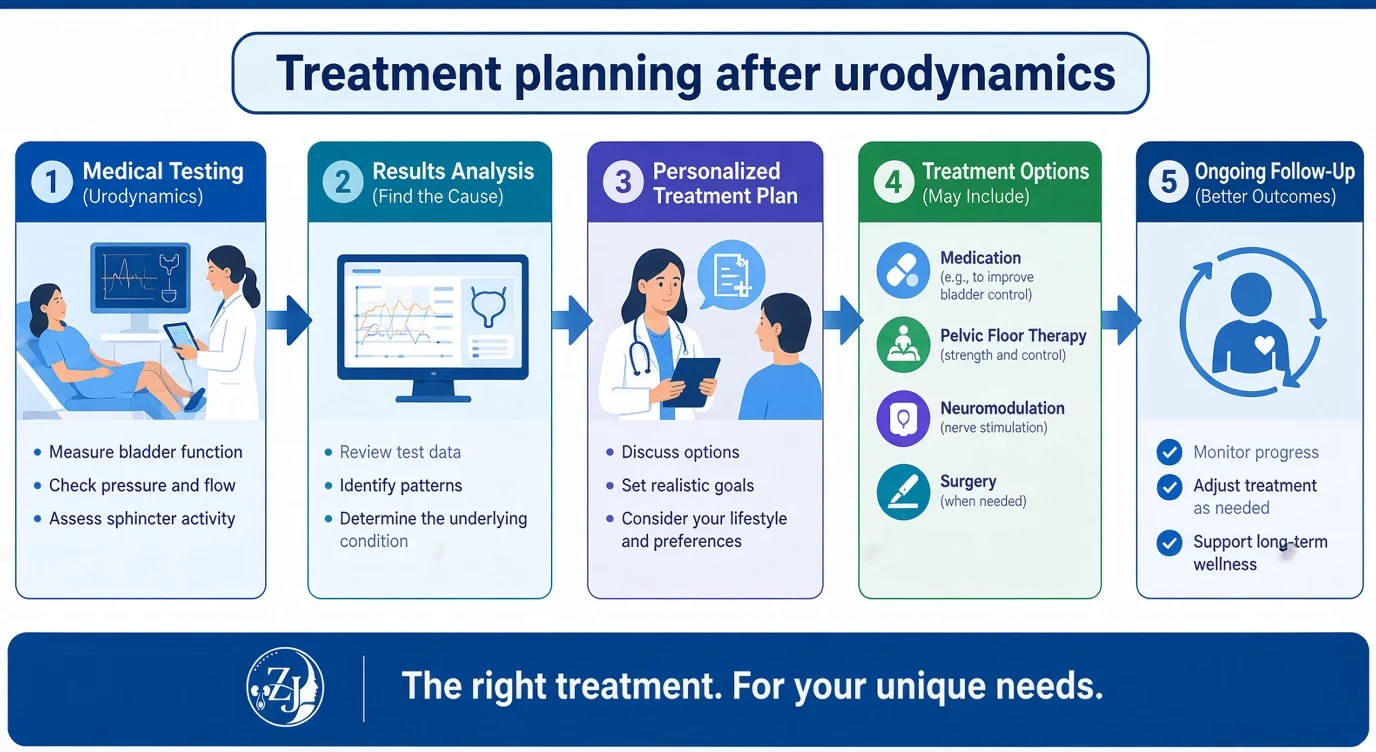
Depending on the findings, treatment may include:
- Bladder retraining
- Timed voiding
- Pelvic floor muscle training
- Pelvic floor physical therapy
- Fluid and caffeine adjustments
- Medication for overactive bladder
- Treatment for constipation or pelvic floor dysfunction
- Management of recurrent urinary infections when appropriate
- Further investigation, such as cystoscopy or imaging
- Surgical treatment when clearly indicated
The value of urodynamics is that it can help match treatment to the underlying functional problem. It does not guarantee that one particular treatment will work, but it can improve the quality of the decision-making process.

What happens After the test
You might notice mild burning when urinating for a few hours. Drinking fluids can help reduce discomfort, unless you have been advised to restrict fluids for another medical reason.
Catheter-related urinary infection is uncommon but possible. Contact your doctor immediately if you develop:
- Fever or chills
- Worsening pain
- Significant blood in the urine
- Increasing burning
- Inability to urinate
- Feeling generally unwell
Most women can drive themselves home and return to routine activities after a standard study, provided they feel comfortable and have not been given medication that affects alertness.
Book Your Bladder Diagnostic Assessment in Ajman
If bladder symptoms are affecting your daily life, the most important step is finding out exactly what is causing them. Urodynamic testing and bladder diagnostics in Ajman, UAE with Dr. Zahra Jahanabadi provide the clinical clarity needed to move from uncertainty to effective, targeted treatment.
Contact the clinic today to schedule your consultation.





You can submit the first comment for this post using the form above.