


Overactive Bladder Treatment in Ajman, UAE can help women manage bothersome bladder symptoms. As a female urologist, I offer personalised assessment and care to understand your symptoms and their impact on daily life.
Treatment usually starts with bladder training and pelvic floor exercises, with medication or minimally invasive procedures considered when needed. Persistent bladder symptoms deserve attention—not simply acceptance as part of ageing.
What Is Overactive Bladder Syndrome?
Overactive bladder, or OAB, describes a sudden and difficult-to-control need to pass urine. It can also cause frequent trips to the bathroom, waking during the night, and sometimes urine leakage before you reach the toilet.
Normally, the bladder stores urine until you are ready to empty it. With OAB, the bladder can send a strong urge too early, even when it is not completely full. This may feel like an urgent “I need to go now” signal that is difficult to ignore.
You may notice:
- A sudden urge to urinate
- Going to the toilet more often than usual
- Waking at night to pass urine
- Leaking on the way to the bathroom
- Planning outings around the location of nearby toilets
OAB-related leakage is linked to urgency. This is different from stress urinary incontinence, which happens when urine leaks during coughing, sneezing, laughing, lifting, or exercise. Some women experience both types.
These symptoms can interfere with your normal routine and make you feel less confident when you are away from home. Night-time trips to the bathroom can also disturb your sleep, leaving you tired during the day.
OAB is common, but ongoing bladder symptoms are not something you simply have to live with.
Causes and Risk Factors of Overactive Bladder in Women
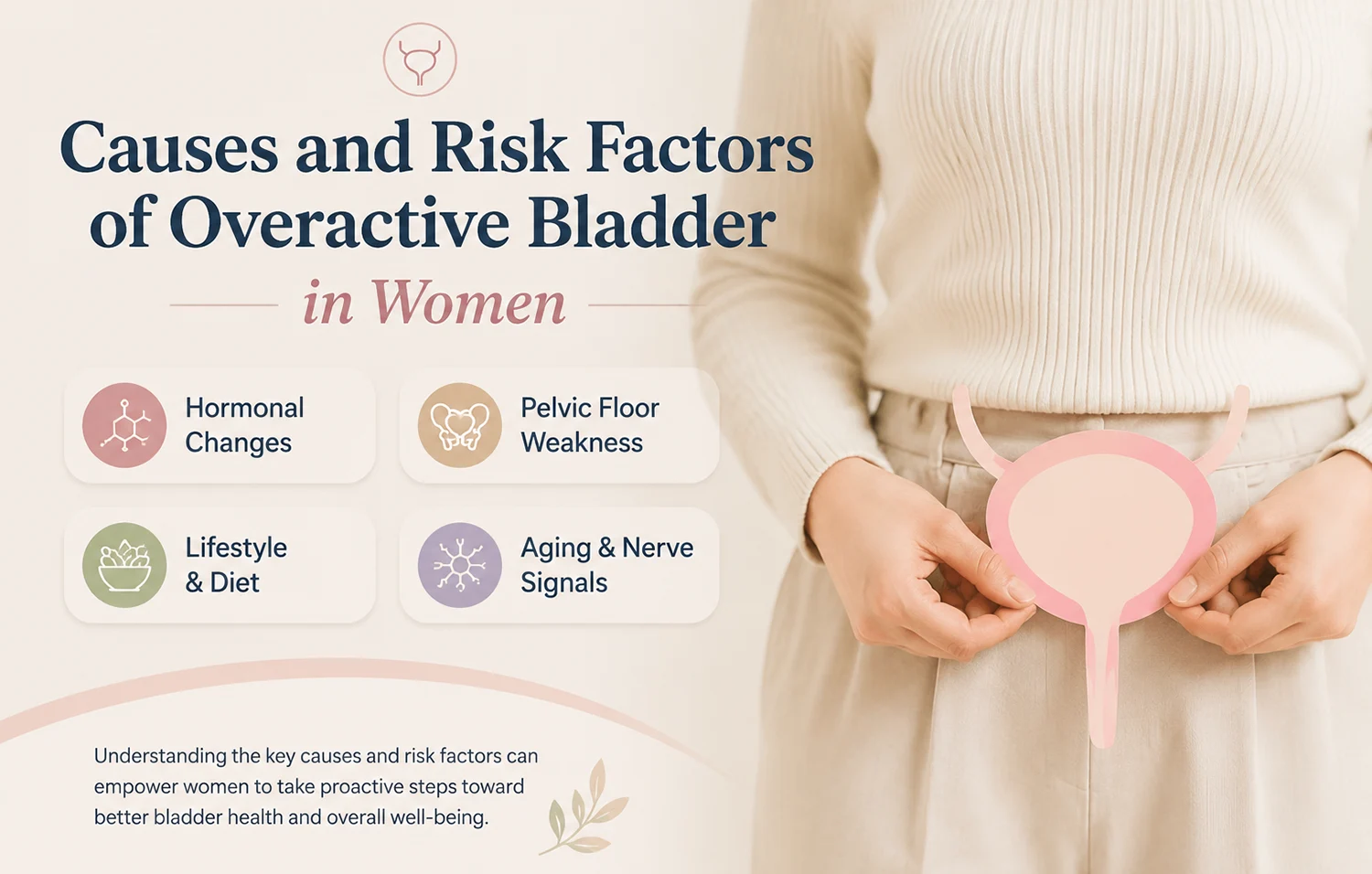
Overactive bladder does not always have one clear cause. In many women, symptoms develop because several factors affect the bladder or the muscles that help control it.
Bladder Muscle Activity
The bladder muscle can contract before the bladder is full. This creates a sudden urge that can be difficult to delay. When no specific neurological cause is found, this is often called idiopathic detrusor overactivity.
Hormonal Changes
Hormonal changes can affect bladder health, particularly after menopause. Lower oestrogen levels may alter the bladder lining and the tissues around the urethra. Some women then notice more urgency, frequent urination, or urinary infections.
Pregnancy and Childbirth
Pregnancy and childbirth place extra pressure on the pelvic floor. Vaginal delivery can affect the muscles and nerves that support bladder control, although symptoms can develop after any type of birth.
Weight and Constipation
Extra weight can increase pressure around the bladder. Constipation may also place strain on the pelvic floor and make urgency worse. Improving these factors can sometimes help ease bladder symptoms.
Diabetes and Urinary Infections
Diabetes can change the way your bladder works. A urinary infection can also cause sudden urges and more frequent urination. Because these symptoms can look like OAB, it is important to check for both conditions first.
Neurological Conditions
Conditions such as multiple sclerosis and Parkinson’s disease can affect the communication between the brain, nerves, and bladder. This may lead to urgency or difficulty controlling urination.
Food, Drinks, and Medication
Caffeine and alcohol can make bladder symptoms worse. Fizzy drinks and spicy foods also cause more urgency for some women, while citrus products and artificial sweeteners do the same for others. Water tablets and similar medicines increase urine production, which can mean more frequent trips to the bathroom.
Physical and Pelvic Examination
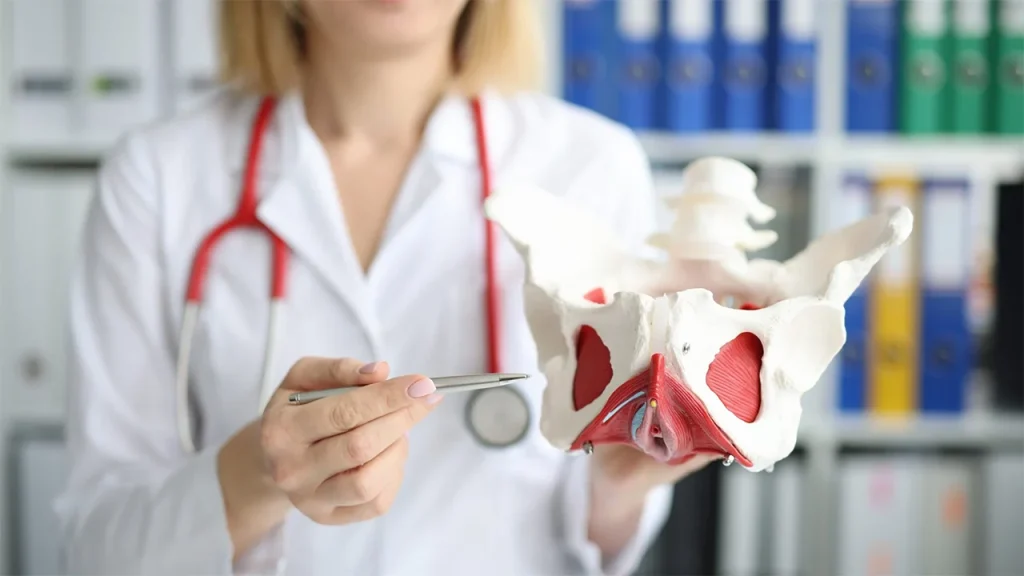
If an examination is needed, we will explain what it involves before we begin. It helps us understand whether the pelvic floor or nearby tissues are contributing to your bladder symptoms.
During the examination, we look at:
- How well the pelvic floor muscles tighten and relax
- The support around the bladder, vagina, and other pelvic organs
- The condition of the vaginal and urethral tissues
- Any tenderness or muscle tightness
- Signs of pelvic organ prolapse
- Leakage that occurs with coughing or straining
The examination is only carried out when it is relevant to your symptoms.
Urine Testing
A urine test can help rule out an infection and check for blood, glucose, or other changes. This is useful because an infection can sometimes cause symptoms that feel much like overactive bladder. Treating the infection may be all that is needed to improve them.
Post-Void Residual Measurement
This test shows how much urine remains after you have emptied your bladder. We usually measure it with an ultrasound. The result helps us see whether your bladder is emptying as it should.
Urodynamic Testing
This test provides a closer look at how your bladder stores and passes urine. It is not necessary for everyone, but we usually recommend.
Overactive Bladder Treatment Options in Ajman

Treatment usually begins with simple approaches and progresses only when symptoms do not improve. Most women do not need surgery.
First Step: Bladder and Lifestyle Support
For many women, small and consistent changes bring the first noticeable improvement.
Bladder Retraining
Bladder retraining usually follows a structured program lasting at least six weeks. You learn how to manage a sudden urge and gradually extend the time between bathroom visits. Over time, the bladder becomes less reactive, so every urge no longer feels like an emergency.
Pelvic Floor Physiotherapy
Pelvic floor exercises are useful for more than stress incontinence. A well-timed muscle contraction can help settle a sudden wave of urgency. When extra support is needed, we arrange pelvic floor physiotherapy so you can learn the correct technique with practical guidance.
Food and Drink
Caffeine and alcohol can irritate the bladder, so reducing them often helps. Drinking too little water is not the answer. Concentrated urine can increase irritation and make urgency worse. The goal is to drink a sensible amount throughout the day.
Weight Management
Extra weight places more pressure on the bladder and pelvic floor. For women with a BMI above 30 kg/m², even modest weight loss can improve bladder control.
Vaginal Oestrogen
After menopause, low-dose vaginal oestrogen can improve the health of tissues around the vagina and urethra. This local treatment is different from systemic hormone therapy. We discuss your medical history first to decide whether it is suitable for you.
Second Step: Medication
Medication can be added when bladder training and lifestyle changes are not enough. We usually review your response after a few weeks and ask about any side effects.
Antimuscarinic Medicines
These medicines help calm unwanted bladder contractions.
Beta-3 Agonists
Mirabegron relaxes the bladder in a different way. It is often considered when antimuscarinic medicine has not worked.
Third Step: Minimally Invasive Treatment
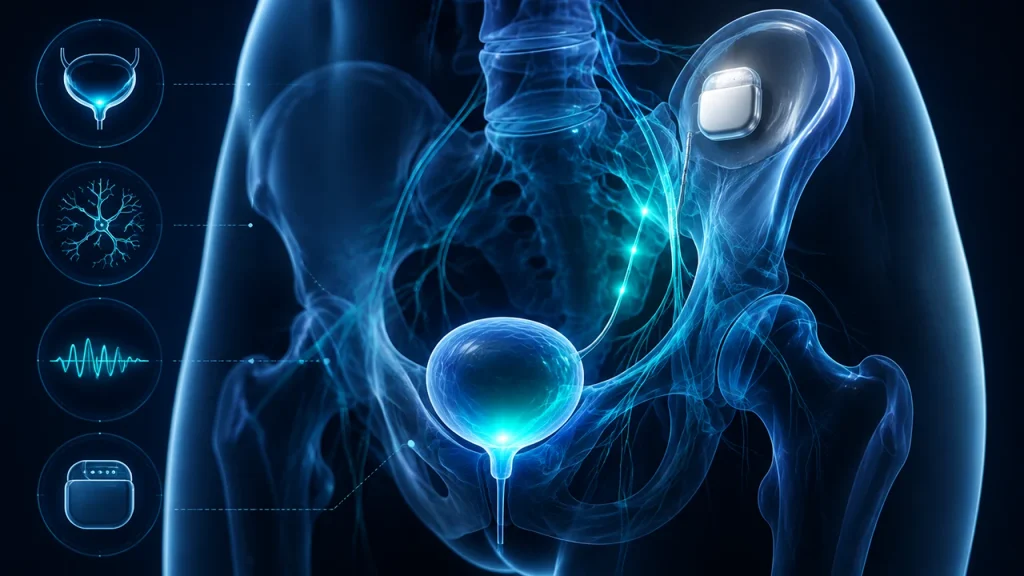
When medication does not provide enough relief or causes unacceptable side effects, a procedure can be considered.
Bladder Botox
Botulinum toxin A is injected into the bladder wall using a thin camera called a cystoscope. The procedure is often carried out under local anaesthesia without an overnight hospital stay.
Botox reduces unwanted bladder contractions, and the benefit commonly lasts between six and twelve months. Treatment can be repeated when it has worked well. A small number of patients have difficulty emptying the bladder afterwards, so we explain this risk clearly before going ahead.
Tibial Nerve Stimulation
Percutaneous tibial nerve stimulation, or PTNS, uses a fine needle placed near the ankle. Gentle electrical stimulation travels along a nerve connected to bladder control.
A typical course involves twelve appointments. Follow-up sessions can help maintain the improvement.
Sacral Neuromodulation
Sacral neuromodulation is considered for severe symptoms that have not responded to other treatments. A small implanted device helps regulate the nerve signals between the bladder and the spinal cord. Careful assessment is needed before choosing this option.
Surgery
Major surgery is rarely needed for overactive bladder. Bladder when is considered only when symptoms are severe and other treatments have not helped. Before taking this step, a specialist team will discuss the procedure with you, including its possible benefits and risks.
Book a Consultation for Overactive Bladder in Ajman
Bladder urgency, frequent night-time trips, or leakage can slowly start to shape your daily routine. With the right assessment, you can understand what is causing the problem and explore ways to manage it.
Appointments are private and handled with care and respect at Thumbay University Hospital in Ajman.
To discuss your symptoms with Dr. Zahra Jahanabadi, book a consultation today.





You can submit the first comment for this post using the form above.