
Neurogenic Bladder Doctor in Ajman, UAE | Dr. Zahra Jahanabadi


Most bladder problems start in the bladder itself, but neurogenic bladder has a different cause: it develops when a neurological condition or injury disrupts the signals that control the bladder and the rest of the lower urinary tract.
When those signals are affected, the bladder can become too weak to empty fully, contract unexpectedly and cause urgency or leakage, and some people experience both patterns at the same time.
As a doctor caring for people with neurogenic bladder in Ajman, UAE, I focus on three priorities:
- understanding how your neurological condition relates to your symptoms
- protecting your kidneys from damage that can develop without clear warning signs
- finding practical ways to improve your condition while being honest about what treatment may work
What Is Neurogenic Bladder?
Neurogenic bladder is a change in bladder function caused by a condition or injury affecting the brain, spinal cord or nerves that control urination.
These parts of the nervous system normally send signals that help the bladder store urine and empty it at the right time; when those signals are disrupted, the bladder no longer works as it should.
The broader medical term Neurogenic Lower Urinary Tract Dysfunction (NLUTD) is also used because the nerve-related problem can affect the bladder and the other structures involved in passing urine.
Neurogenic Bladder: A Nerve-Signal Problem
In neurogenic bladder the key issue is how the nervous system coordinates the bladder’s activity. The brain and spinal cord send signals that help the bladder store urine and empty it at the right time; when a neurological condition or injury disrupts those signals the bladder can have difficulty emptying or contract before you are ready.
This distinction matters because care needs to address the cause of the bladder changes, not just the symptoms. Bladder training and pelvic floor exercises help some people, but they are not suitable for everyone and might not address nerve-related problems on their own. A Neurogenic Bladder Doctor in Ajman, UAE can help determine which approaches fit your situation.
Difficulty emptying can leave urine behind and increase the risk of urinary tract infections. When symptoms keep returning your doctor can check whether the bladder is emptying properly and whether an infection is present, rather than relying on repeated antibiotics alone.
Neurological Conditions and Bladder Symptoms
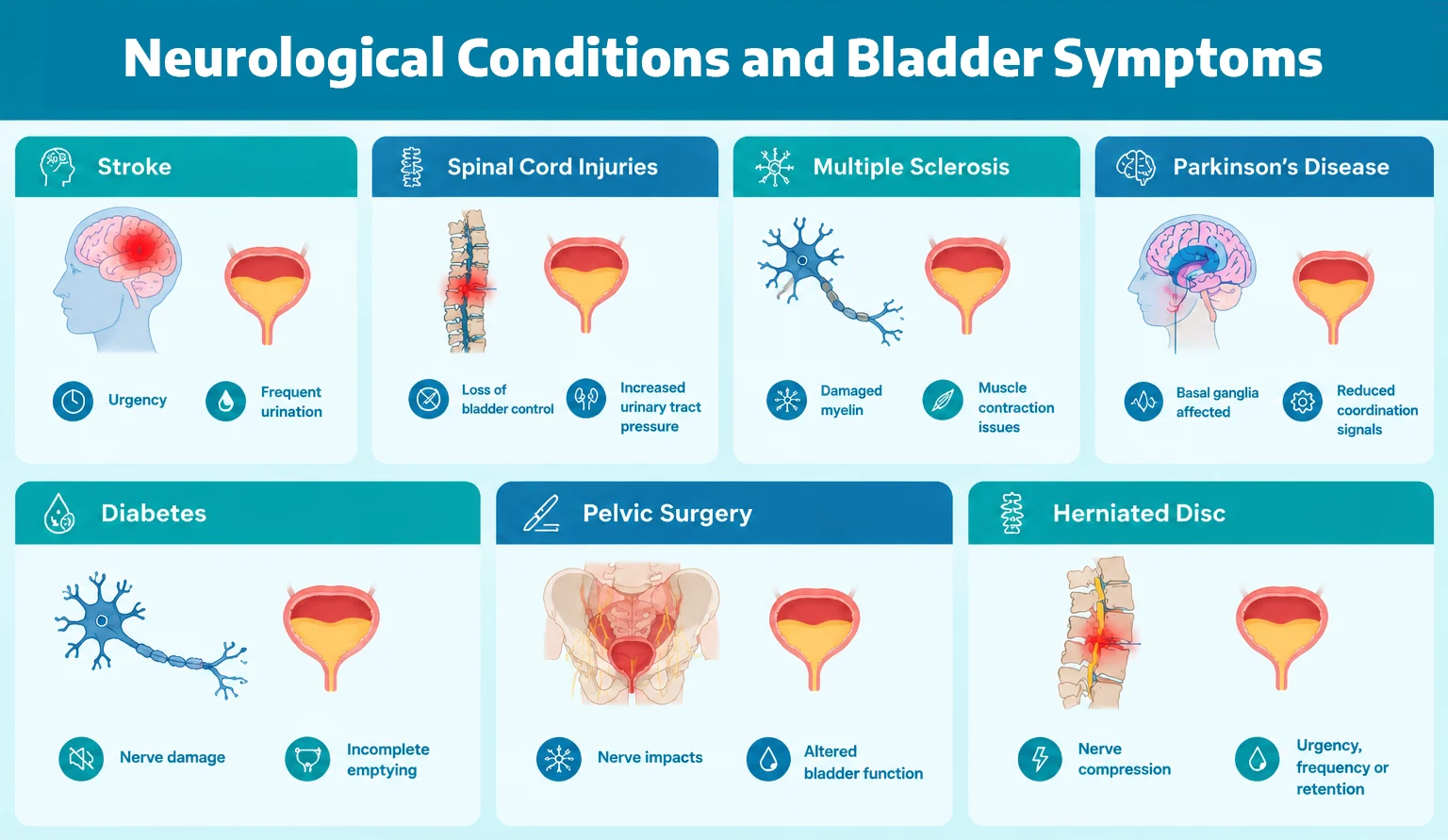
Many women who see me as a bladder specialist in Ajman already know they have a neurological condition, but they might not realize that it can also affect how the bladder stores and releases urine.
The pattern depends on which nerves are affected and how the condition changes over time.
A stroke can lead to urgency and frequent urination, while some women experience difficulty emptying their bladder. Recovery varies, so ongoing symptoms deserve attention.
Spinal cord injuries may disrupt bladder control and sometimes create pressure that puts the urinary tract at risk.
Multiple sclerosis might cause the bladder muscle to contract during filling, and some women also have trouble emptying fully.
Parkinson’s disease can affect the signals that coordinate urination, leading to urgency or difficulty emptying.
Diabetes could gradually damage the nerves involved in bladder sensation and emptying, so urine can build up without a strong urge to go.
Pelvic surgery sometimes affects the nerves that help control the bladder, with symptoms appearing soon after surgery or later on.
A herniated disc may also press on nerves in the lower spine and interfere with bladder control; the effects depend on the location and severity of the pressure.
When common bladder problems continue despite usual treatment, it is worth looking more closely at the possible role of the nervous system.
For bladder leakage not linked to a neurological condition, see the Urinary Incontinence page; for other pelvic floor concerns, visit the Female Pelvic Floor Specialist page.
How Neurogenic Bladder Is Diagnosed
Your doctor begins by listening carefully to your symptoms and learning about your neurological history. Questions about urine leakage, urgency, nighttime urination, difficulty starting the flow and a feeling of incomplete emptying can reveal how the bladder is behaving.
A physical examination can provide further information.
When the symptoms suggest a problem with bladder control, your doctor can arrange tests that show how the nervous system and urinary tract are working together.
These tests often include:
- Cystoscopy: A small camera is used to examine the urethra and the inside of the bladder.
- Imaging: An ultrasound, X-ray, CT scan or MRI can show the bladder, kidneys and nearby structures.
- Urodynamic testing: This test measures how the bladder stores urine, the pressure that develops inside it, the strength of the urine flow and how completely the bladder empties.

How a Neurogenic Bladder Specialist Checks Your Bladder Risk

As a bladder specialist serving patients across the UAE, I use established AUA/SUFU guidance to understand each patient’s risk rather than relying on guesswork. The risk group depends on the neurological condition and how well the bladder empties, alongside kidney tests, imaging and urodynamic results.
Patients are grouped as low, unknown, moderate or high risk.
People in the low-risk group generally have normal kidney function and imaging, low residual urine after urination and no previous complications.
They usually do not need routine imaging or urodynamic tests unless their symptoms change.
When risk is unclear, initial kidney tests and urinary tract imaging help build a clearer picture.
Urodynamic testing can show whether bladder pressure or emptying problems need closer attention.
Patients with concerning findings, such as urine retention or high bladder pressures, often need regular follow-up to monitor kidney health and bladder function.
people at higher risk receive closer monitoring, while those at lower risk can avoid tests that are not needed. Your doctor can explain your results and set a follow-up schedule suited to your individual risk.
Treatment for Neurogenic Bladder in Ajman, UAE
Neurogenic bladder is not always curable, but the right treatment can help manage symptoms and protect the kidneys. Treatment depends on how your bladder stores and empties urine, so your doctor will explain the options that fit your needs and review them with you over time.

Everyday strategies such as adjusting bathroom routines and bladder training can help some people manage urgency and leakage.
Usually, Pelvic floor exercises can be useful when the muscles and nerves are working well enough to respond; a specialist can show you how to do them and whether they are suitable for you.
Medication can relax an overactive bladder and reduce urgency or leakage. When the bladder is too weak to empty fully, medication options are more limited, so your doctor may recommend another way to drain it.
Interstim: A therapy called Interstim is typically reserved for patients who are not helped by behavioral therapy and medications. Interstim is a small pacemaker that sends impulses to the sacral nerve, which controls the bladder. The success rates for this procedure are impressive.
Catheterization uses a thin tube to empty the bladder. Clean intermittent catheterization involves inserting and removing the tube at regular times, and it is often preferred when ongoing help with emptying is needed.
A catheter left in place is another option in some situations, though it comes with different risks and care needs.
If symptoms remain difficult despite these approaches, your doctor discuss treatments such as bladder injections or nerve stimulation.
In selected cases, surgery can enlarge the bladder, improve urine flow or create a different route for urine to leave the body. These procedures are usually considered when simpler treatments have not provided enough control or kidney protection.
Why Neurogenic Bladder Deserves More Than a Pad and a Prayer
Neurogenic bladder can affect far more than bathroom habits, even though other people might not see what you are managing. This condition makes everyday plans harder, especially when you are unsure whether you will find a toilet in time or you are worried about leakage and repeated infections. Over time, that worry can affect how comfortable you feel at work, with friends and in your relationships.
Pads can help manage leakage, but they are not a treatment plan, and repeated antibiotics do not explain why urinary infections keep returning. Your symptoms deserve a closer look and care that addresses their cause.
With the right support, it is often possible to protect your health and make your life plans less restricted, even when the underlying neurological condition remains.

Why Women in the UAE Delay Care for Neurogenic Bladder

Research from Cleveland Clinic Abu Dhabi found that 42.2 percent of the female adult population in the UAE experiences bladder control issues at some point in their lives. Neurogenic bladder is among the presentations seeing increased reporting across the country.
Despite this, many women delay seeking specialist care for years. The reasons are understandable. The consequences are serious.
Embarrassment: Bladder problems are often kept private in UAE society. Many women stay silent because they fear judgment or do not want to worry their families.
Misattribution: Symptoms are often blamed on age, childbirth or stress. Repeated UTIs can be treated separately while the real problem, such as incomplete bladder emptying, remains unnoticed.
Lack of awareness: Many women do not realize that bladder symptoms can be linked to diabetes, MS, spinal conditions or an old pelvic surgery. They might also be unaware that a neurogenic bladder doctor can help.
The consequence of delay is real. Unmanaged high bladder pressures can cause irreversible kidney damage before you feel a single symptom. Recurrent infections can escalate to sepsis. What could have been managed with a clear, structured plan turns into a crisis.
Book Your Consultation
If you have reached this point, you already understand that neurogenic bladder can affect both your health and your life.
At Thumbay University Hospital Ajman you can speak with Dr. Zahra Jahanabadi, Female Urologist in Ajman, UAE, about your bladder symptoms and neurological history in a private and respectful setting.
During your consultation you can discuss the symptoms that affect your routine, review any tests you have already completed and understand which further checks could be helpful.
Reference: https://my.clevelandclinic.org/health/diseases/15133-neurogenic-bladder





You can submit the first comment for this post using the form above.