
Bladder Botox Injections in Ajman, UAE | Dr. Zahra Jahanabadi


Overactive bladder can affect much more than how often you visit the toilet. Sudden urgency, frequent urination and waking several times during the night can make long time periods outside the home activities such as work and travel difficult. For women who have tried bladder training, lifestyle changes and medication without getting enough relief, bladder Botox may be another treatment option worth discussing.
I’m Dr. Zahra Jahanabadi, a urologist specializing in female and functional urology. In my practice, I assess whether Botox is appropriate based on the patient’s symptoms, previous treatments and bladder function.
This article explains what the procedure involves, what to expect and, and Who Is the best Candidate for this procedure.
When Might Bladder Botox Be Considered?
Overactive bladder is usually marked by a sudden, difficult-to-control urge to urinate. It can come with frequent daytime trips, waking at night to urinate, or urge leakage before reaching the toilet.
Those symptoms can have different causes, so the first step is to understand what is happening rather than assume every urgency problem needs Botox.
Bladder Botox becomes a conversation when symptoms remain troublesome despite reasonable earlier treatment, or when medication side effects make it hard to continue. Earlier options include lifestyle changes and medical treatments, which we’ve discussed in the following article.
Read more : Urinary Incontinence Treatment
Before discussing an injection, I review your symptoms, previous treatments and medicines. A urine test helps check for infection. Depending on your history, I might also recommend checking how well the bladder empties or investigating another cause of urinary symptoms. These steps help us decide whether Botox addresses the problem we are trying to treat.
How Bladder Botox Works and Its Limitations
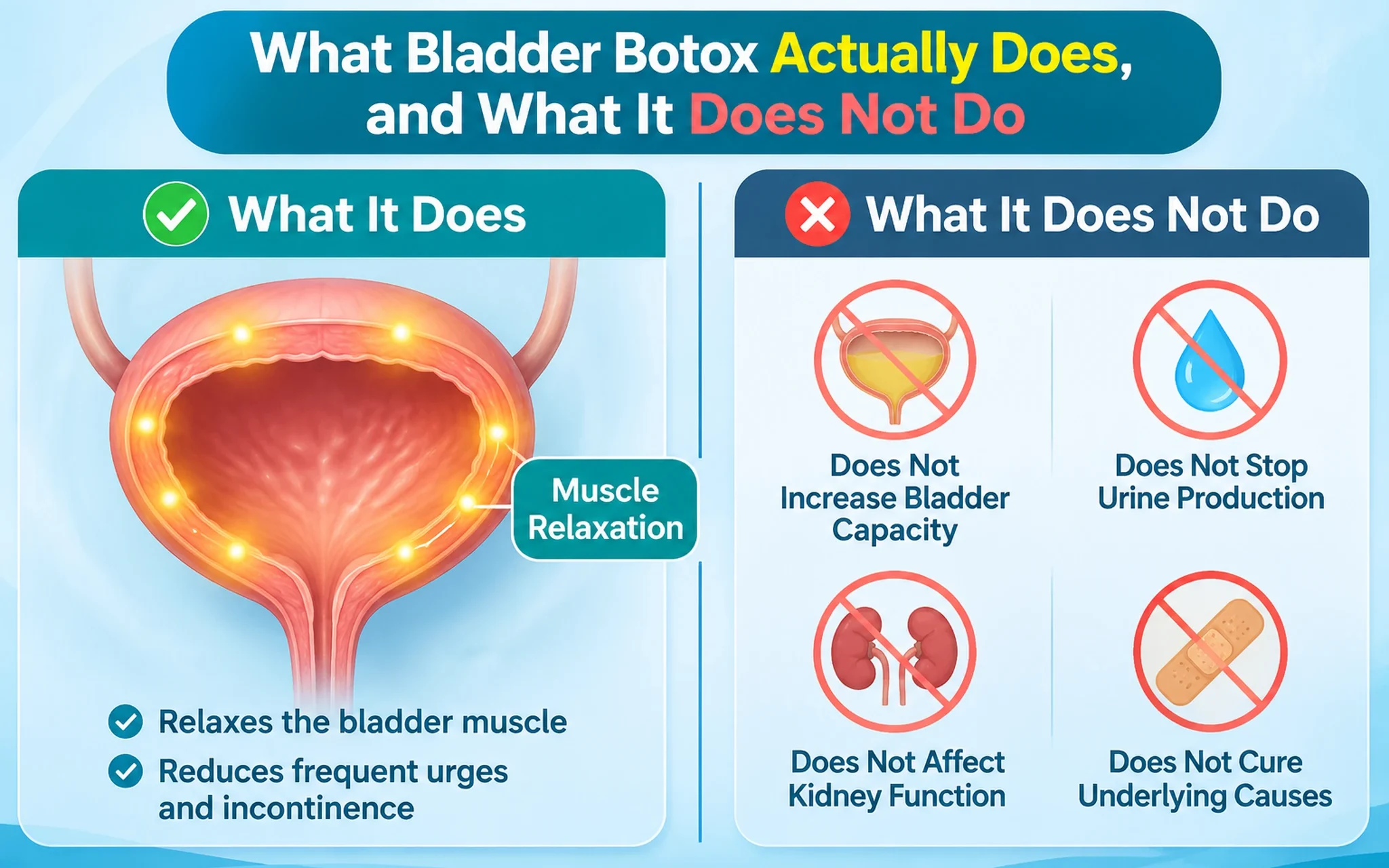
Bladder Botox works by reducing involuntary contractions of the bladder muscle. During the procedure, onabotulinumtoxinA is injected into the bladder wall, helping the bladder store urine more comfortably and reducing sudden urges to urinate.
It can be particularly helpful for women experiencing urgency, frequent urination and leakage associated with an overactive bladder. However, it does not treat every type of urinary incontinence. For example, leakage when coughing, sneezing or exercising usually has a different underlying cause and requires a separate assessment.
The response varies between patients. Some experience a noticeable improvement in their daily symptoms, while others get more limited relief. The benefit gradually wears off, so symptoms might eventually return.
Before considering another injection, I would first review how much improvement you experienced and whether you had any problems emptying your bladder. When the first treatment provides little benefit, it is worth reassessing the diagnosis and considering other treatment options rather than simply repeating the procedure.
Who Is a Candidate for Bladder Botox in Ajman, UAE?
I don’t recommend bladder Botox based on urinary urgency alone. Before considering the procedure, I need to understand how frequently symptoms occur, how much they interfere with your activities and what treatments have already been tried.
Bladder emptying is another important part of the checkup. A woman who already has difficulty passing urine might face a greater risk of urinary retention after Botox. We also need to discuss whether she could manage intermittent catheterization temporarily if it becomes necessary.
An active urinary tract infection needs to be addressed before treatment. Previous episodes of urinary retention, other bladder conditions and neurological disorders may also influence the treatment decision.
The Procedure Itself: A Day-Case Cystoscopy, Step by Step
Bladder Botox is usually performed as an outpatient or day-case procedure, so most patients return home the same day. Depending on the clinic setting and your circumstances, it is done with local anesthetic gel or light sedation.
We discuss comfort and preparation beforehand so you know what to expect.
A thin cystoscope is passed gently through the urethra into the bladder. Through it, the doctor injects Botox into several points in the bladder wall. The procedure itself is commonly brief, often around 15 to 30 minutes, although the overall visit takes longer for preparation and recovery.
You might notice pressure or brief stinging, but anesthetic is used and most women tolerate the procedure. Mild burning or a small amount of blood when passing urine can follow.
Most patients can return to their usual activities within a day or two. I’ll give you specific instructions to follow after the procedure.
Will You Need a Catheter After Bladder Botox?
Before treatment, I explain that Botox can ease urgency but can also make it harder to empty the bladder. A check after you urinate helps us spot this problem. If you cannot empty enough, you might need to use a small catheter for a while to drain your bladder, so we should discuss this before the injection and make sure you feel able and willing to do it.
The possibility of temporary catheterization is something I discuss with patients before treatment, not after a problem develops.
In a retrospective study of 397 women receiving their first bladder Botox treatment, 34 women (8.6%) required clean intermittent catheterization afterward. This gives an indication of what happened in that particular group, although individual risk depends on several factors. It should not be interpreted as a prediction of what will happen to every patient.
Follow-up is an important part of care. Contact the hospital if you find it difficult to pass urine, feel increasing discomfort, or pass only small amounts despite a strong urge. If you cannot urinate at all, seek help immediately rather than waiting for a scheduled appointment.
What Happens After the Injection?
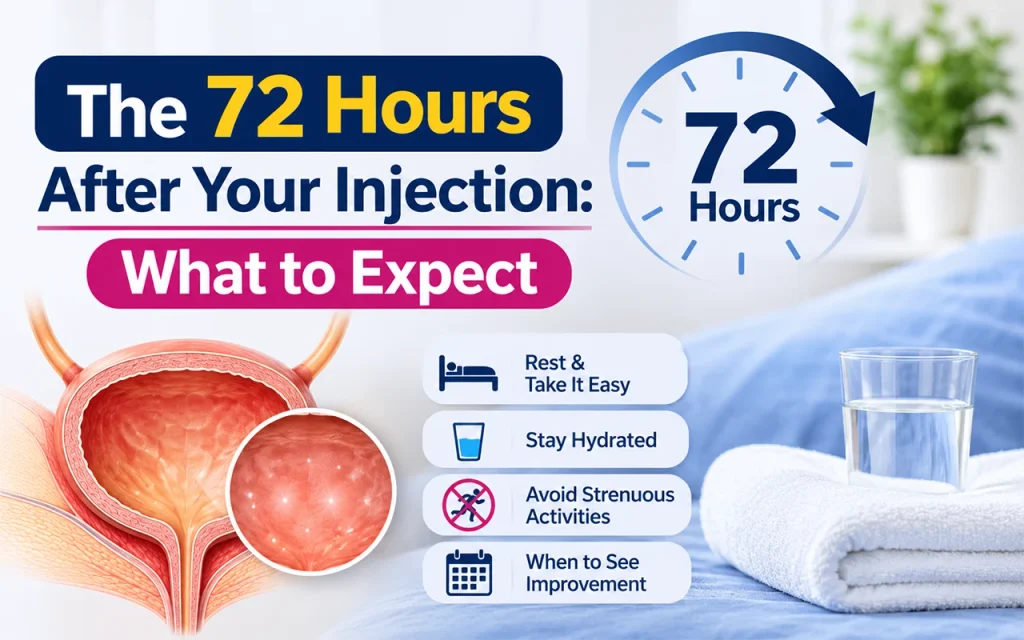
Most women can go home on the day of the procedure. During the first day or two, you may notice mild burning when passing urine, bladder irritation or a small amount of blood. These symptoms usually settle without causing further problems.
The improvement in bladder symptoms is not immediate. Botox takes time to affect the bladder muscle, and many patients begin noticing a difference within one to two weeks. The effect may continue to develop over the following weeks.
I usually recommend reviewing the response if there has been no worthwhile improvement after approximately four weeks. At that point, we can assess whether the treatment has worked as expected or whether another approach should be considered.
Contact me if you are facing the following problems, as you may need urgent care:
- you cannot urinate
- develop a fever
- see increasing blood in your urine
- have severe pain
How Long Does Bladder Botox Last?
Bladder Botox wears off, so symptoms can gradually return. In a long-term extension study, the median duration of effect was 7.6 months. Retreatment was requested within six months by 34.2% of participants, between six and twelve months by 37.2%, and after more than twelve months by 28.5%. These are study results, not a schedule everyone will follow.
A repeat injection is considered after we review:
- How much your symptoms improved and how long the benefit lasted
- Whether you had difficulty emptying your bladder
- Whether you developed an infection or another complication
- Whether another injection is suitable and when it should be given
Why Choose a Female Urologist for Bladder Botox in Ajman, UAE?

My clinical work focuses on female and functional urology, including conditions affecting bladder control, urinary incontinence and pelvic floor function. I have more than 18 years of clinical, surgical and academic experience.
When assessing a patient for bladder Botox, I look beyond the symptoms themselves. Understanding why the bladder is behaving this way, how well it empties and what previous treatments have achieved is essential before recommending an injection.
I also make sure patients understand the practical aspects of treatment, particularly the possibility of temporary catheterization and the need for follow-up.

Book Your Consultation with Dr. Zahra
If you are experiencing frequent urination, sudden urgency or urge leakage despite previous treatment, an assessment can help establish whether bladder Botox is a suitable option.
Dr. Zahra Jahanabadi provides urological consultations at Thumbay University Hospital in Ajman. When attending your appointment, bring a list of medications you currently take and details of previous treatments or investigations. Keeping a bladder diary before the consultation can also be useful.
During the appointment, we can review your symptoms, assess bladder function and discuss the potential benefits and risks of Botox before deciding whether to proceed.





You can submit the first comment for this post using the form above.